Dhurandhar: The Revenge (2026): Aditya Dhar’s Timeline Gamble Pays Off Hard


A RAW agent embedded inside Lyari’s bloodiest gang, watching the man he replaced get buried, that is the precise moral trap Ranveer Singh’s Hamza Ali Mazari inhabits for nearly four hours. By the time Bade Sahab is unmasked as Dawood Ibrahim, you have long stopped asking whether Hamza is the hero.
Aditya Dhar Treats the Timeline Like a Weapon, Not a Gimmick
Dhar’s masterstroke here is structural. The non-linear threading of Jaskirat’s backstory into the main Lyari timeline doesn’t feel decorative, it recontextualises everything you thought you understood about the mission. That’s disciplined, confident direction.
The weakness, if one must name it, is the screenplay’s reluctance to give its secondary motivations the same precision. At 235 minutes, certain power-shift passages stretch past their dramatic utility. The screenplay earns its ambition in the final act but costs patience well before it arrives.
The Lyari Gang Wars Are Where Dhurandhar: The Revenge Earns Its Runtime
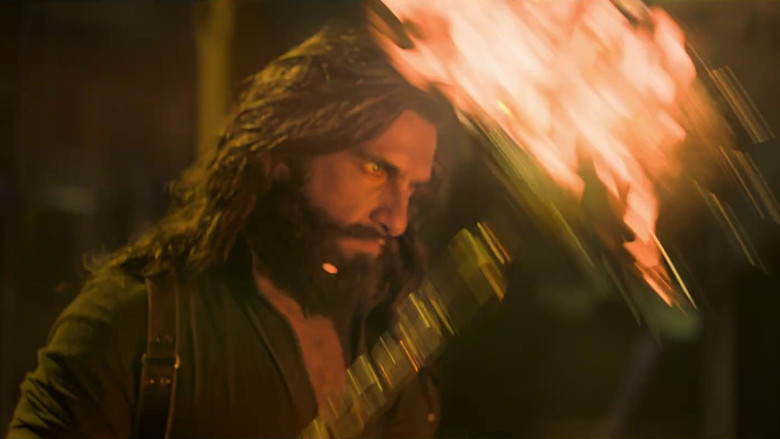
The depiction of Lyari’s gang ecosystem, police, politicians, and crime lords braided into a single corrupt organism, is the film’s most compelling sustained achievement. Dhar maps power like a military tactician. Every hierarchy shift lands with weight.
The action sequences are prolonged and deliberately physical. One extended set-piece unfolding alongside Jaskirat’s backstory reveal is genuinely unsettling, grotesque in a way that feels purposeful rather than gratuitous. It earns its ugliness.
The culmination scene, the death of SP Chaudhry Aslam igniting the unknown gunmen saga, is the film’s most discussed passage, and rightly so. It is the moment where the thriller’s architecture finally clicks into full view. I found myself rewinding the logic rather than questioning it, which is the highest compliment a thriller structure can receive.
If you enjoy the kind of Hindi action thriller that interrogates rather than celebrates, Hindi Crime reviews on this site cover the full range of this genre’s recent evolution.
Sanjay Dutt and Arjun Rampal Occupy the Film’s Moral Extremes
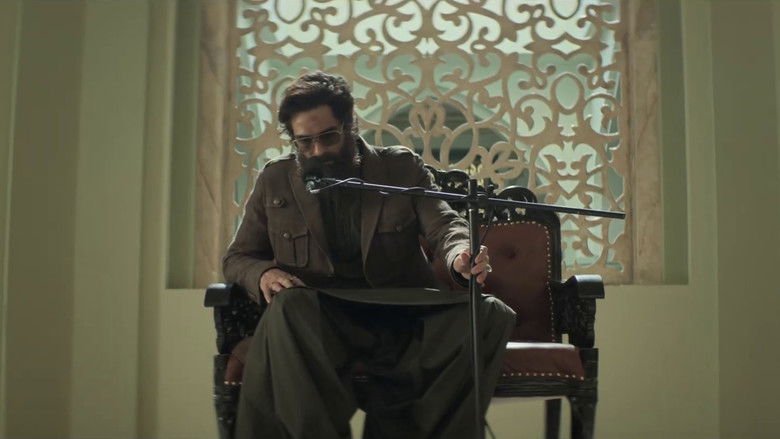
Sanjay Dutt brings a gravitational menace that the film relies on heavily. The moments where his orbit intersects with Hamza’s feel like two weather systems colliding. Dutt doesn’t overplay it, a rare discipline.
Arjun Rampal as Major Iqbal is the film’s most structurally important antagonist force. His presence closes the net around Hamza methodically. Madhavan’s role, while not extensively detailed in available material, rounds out a cast that clearly understood the assignment.
The Propaganda Label Follows This Film Like a Shadow
Audience responses have included pointed references to the film functioning as propaganda, an accusation that trails any Indian spy thriller operating in this specific geopolitical register. Whether that critique is a reading of the film or a reflex to its genre is a legitimate debate.
What complicates the label is Dhar’s own ambiguity about Hamza. A protagonist who spirals into personal war, who blurs the line between mission and vendetta, is not standard nationalist-hero cinema. The film seems aware of what it is building. Whether it resolves that tension satisfyingly is the argument worth having.
If Ranveer Singh’s genre pivot here intrigues you, the earlier Dhurandhar 2025 review examines how Akshaye Khanna shaped the franchise’s original register.
Dhurandhar: The Revenge is the rare Hindi action film that trusts its structure more than its spectacle, and mostly gets away with it. The 235-minute runtime will genuinely test the wrong audience, so a streaming watch with the pause button available is the honest recommendation. Come for the Lyari gang-war architecture, stay for the Dawood Ibrahim reveal, but know that Dhar is asking you to work for it.
Dhurandhar: The Revenge earns a firm 3.5 out of 5, a seriously constructed Hindi action thriller that Aditya Dhar fans owe themselves, even if the runtime demands a specific kind of commitment.
Ankit Jaiswal is the Chief Author, covering Indian cinema and OTT releases with honest, no-filler criticism. An SEO strategist by background, he brings a research-driven approach to film writing, cutting through hype to tell you exactly what's worth your time.