Hum Mein Shahenshah Koun (2026): A 37-Year-Old Rajinikanth Film Finally Arrives


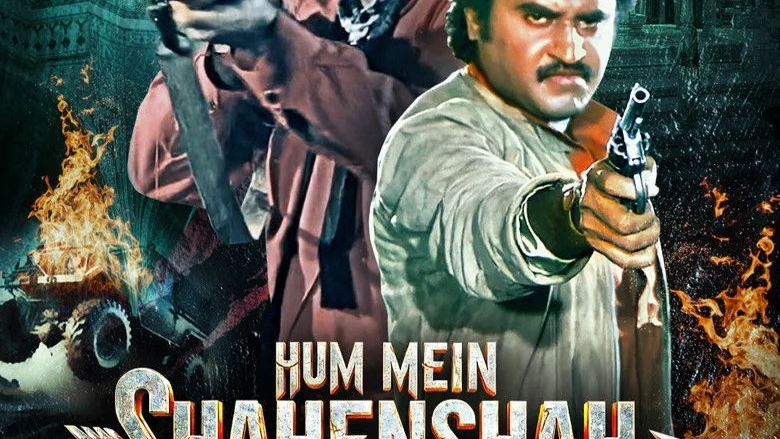
Shot on 35mm Eastman Colour in 1989 and locked away for nearly four decades, Hum Mein Shahenshah Koun arrives in theatres on April 1, 2026, not as a footnote, but as an event. The sheer improbability of its existence, carrying Rajinikanth before his mythology fully calcified, Hema Malini at full command, and Amrish Puri in what is now an irreversibly posthumous performance, makes every frame feel borrowed from a timeline that nearly swallowed this film whole.
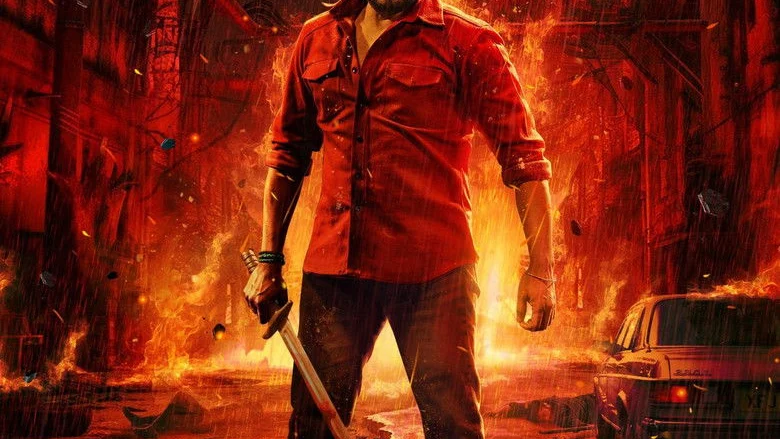
Rajinikanth in 1989 carries a rawness that the superstar era slowly erased
There is something disarming about watching a pre-peak Rajinikanth operate without the weight of his own legend pressing down on every scene. The 1989 vintage catches him before the gestures became ritual and the mass moments became contractual. Without scene-specific data available at this stage, what we can say with confidence is that a vendetta-driven action film structured around Rajinikanth in this era would have demanded physical commitment and screen ownership, both things he had in surplus. Whether the restoration preserves or slightly embalms that energy will be the first real test of the 4K remastering.
Harmesh Malhotra directed it, but the film completed itself without him, and that asymmetry matters
Harmesh Malhotra died before Hum Mein Shahenshah Koun could reach completion. That is not a trivial detail. Direction is not merely the shooting phase, it includes the shaping of tone in the edit, the calibration of pace, the final decisions about what stays and what goes. Producer Raja Roy, who returned from London carrying both grief and resolve after losing his son during post-production, brought the film to its current form. The restoration team applied AI-assisted processes, 4K remastering, and 5.1 surround sound mastering. These are technical achievements worth noting. But an unfinished directorial vision, however lovingly completed, carries visible seams.
The screenplay’s structure, a vendetta-driven action narrative, is a blueprint Malhotra understood well from his commercial Hindi cinema work. The question is whether the connective tissue between action beats holds under contemporary scrutiny. A 1989 action film arriving in 2026 is already fighting an inherent rhythm mismatch with modern audience expectations.
I find myself genuinely uncertain whether to call this a resurrection or an excavation, and that ambivalence is not comfortable for a film asking for full-price theatrical admission. The music, credited to the Laxmikant-Pyarelal axis alongside Ramprasad Sharma, and choreography by Saroj Khan, suggests the film had serious craft investment at its bones. Whether those bones hold the full structure upright is what theatres will reveal.
Shatrughan Sinha, Prem Chopra, and Amrish Puri form a support structure that is now partly a memorial
Shatrughan Sinha in a late-80s Hindi action film is a known quantity, charismatic, slightly theatrical, built for this exact genre architecture. Prem Chopra’s presence implies a villainous or morally complex role, which is almost always where he sharpened his work. And then there is Amrish Puri, whose performance here is posthumous in the most literal sense, he died in 2005, twenty-one years before this film finally reached a screen. Jagdeep, too, is gone. Watching these performances now carries a grief the film’s original makers could not have anticipated.
Hema Malini’s inclusion adds star weight that would have been commercially decisive in 1989. Anita Raj and Sharat Saxena round out a cast that reads like a deliberate assembly of era-defining talent. The ensemble is the film’s most undeniable asset on paper.
For readers who follow Hindi action cinema across its many cycles, Hindi Action reviews covering similar genre territories are worth exploring for context on how these films age.
The real controversy here is not political, it is ethical, about what we owe an unfinished work
No censorship certificate was submitted at the time of the original shoot. The film existed for 37 years in a legal and creative limbo that raises genuine questions. Who owns the final cut of a film whose director is dead? Does a producer’s grief justify a decades-long delay that affected every actor, technician, and collaborator on the project? Raja Roy’s eventual return to complete the film is moving as a human story. As a critical framework for evaluating the finished product, it is more complicated. The film was never submitted for certification during its original run. That is not a bureaucratic footnote, it is a statement about the project’s interrupted state.
The 4K restoration and 5.1 surround sound work suggests the revival team wanted this to feel like a proper theatrical event, not a nostalgic curiosity dropped on a streaming shelf. That ambition deserves acknowledgment, even if the underlying material’s coherence remains unverified until the reels actually unspool.
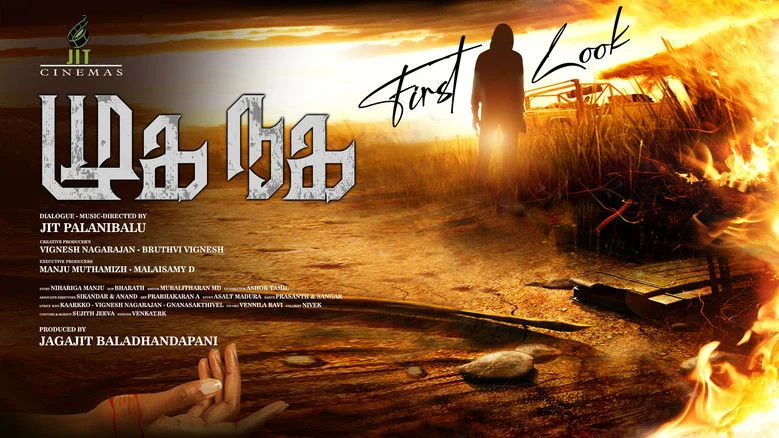
If you want a sharp companion read on how Tamil crime cinema handles its own complicated genre excavations, the MUGA NAGA review review covers related territory with full critical detail.
Hum Mein Shahenshah Koun is a film that deserves its moment in a cinema hall, specifically for the 4K and 5.1 restoration that is the strongest argument for the theatrical experience. If you have any affection for late-80s Hindi action cinema, for Rajinikanth before the phenomenon consumed the man, or for posthumous performances by Amrish Puri and Jagdeep, this is genuinely worth the ticket. Go in with historical curiosity rather than contemporary expectation, and the film will reward you more generously.
A film four decades in the making, Hum Mein Shahenshah Koun is a flawed but fascinatingly alive piece of cinema history that earns a cautious 2.5 out of 5, less for what it delivers and more for the improbable fact of its survival.
Malayalam cinema’s quieter risk-takers are worth your attention too, the Kalyanamaram 2026 verdict is a study in what happens when filmmakers bet against genre expectation.
Ankit Jaiswal is the Chief Author, covering Indian cinema and OTT releases with honest, no-filler criticism. An SEO strategist by background, he brings a research-driven approach to film writing, cutting through hype to tell you exactly what's worth your time.