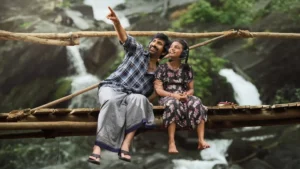
Saiju Kurup stepping back into a role that once earned him quiet, unassuming audience affection is not a small thing, it signals confidence, or a gamble, or perhaps both. Krishnadas Murali returning to direct this sequel with a promised darker register suggests the original’s warmth may now wear sharper edges.
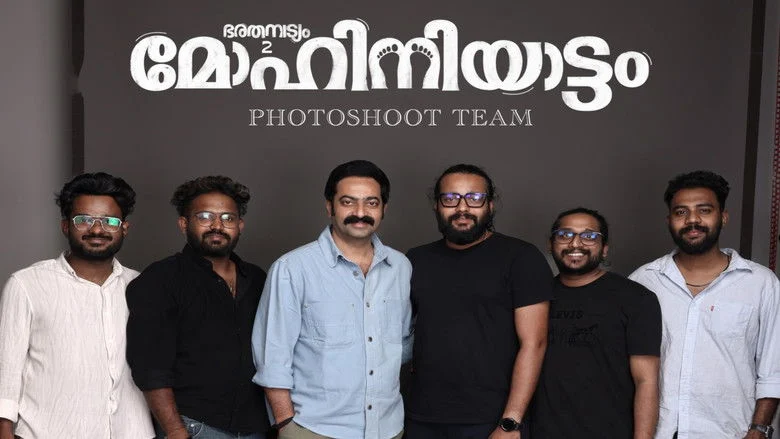
Saiju Kurup Reprising This Role Was Always the Central Bet
Saiju Kurup built something genuinely lived-in with Bharathanatyam in 2024. He was never the flashiest presence in that film, but that restraint was precisely his instrument. A performer who operates in understatement is difficult to sustain across a sequel when the narrative reportedly turns more eventful and intense.
I find myself watching him here with more scrutiny than warmth, which is not always a comfortable shift. Whether he bends to the darker material or anchors it remains the film’s defining question.
Krishnadas Murali Pushes the Tone But the Blueprint Is Thin
Murali co-writes again with Vishnu R. Pradeep, and there is an ambition in choosing to deepen rather than simply repeat the original’s formula. That choice deserves credit. The move toward a more eventful, darker narrative tone shows a director unwilling to coast on goodwill.
The risk, however, is structural. Without a sharply defined central conflict driving the sequel, the tonal shift can feel like atmosphere masking a screenplay still finding its own logic. Darkness as a mood is not the same as darkness earned through story.
The Comedy-Drama Engine: Where the Sequel Must Prove Itself
Malayalam comedy-dramas live and die on the quality of ensemble friction. The original Bharathanatyam understood this. A sequel carrying a reportedly darker tone must still honour the genre’s demand for earned laughs inside genuine stakes.
The introduction of Electronic Kili as trailer music signals a film willing to be playful about its own identity. That self-awareness is either a smart crowd-reading move or a way to mask tonal uncertainty.
Genre-core execution in a comedy-drama sequel is about whether the rhythm of the first film survives the new material. If Murali can hold both registers, the warmth of the original and the sharpness of this chapter, Mohiniyattam could be a rare sequel that justifies its own existence.
If you follow Malayalam comedy-drama closely, Malayalam Not Available reviews on this site cover the genre’s current landscape in useful depth.
Jagadish, Suraj Venjaramoodu, and Vinay Forrt Are Not Decorative Casting
Bringing in Jagadish, Suraj Venjaramoodu, and Vinay Forrt as new additions is the most telling creative decision in this sequel. These are not background faces. Each carries distinct comic and dramatic registers that can either enrich an ensemble or overpower one.
Suraj Venjaramoodu in particular has a quality of unpredictable timing that can steal scenes without announcing the intention. Vinay Forrt operates differently, quieter, more internalized, which could work beautifully against the broader comedic energy if Murali uses that contrast deliberately.
Jagadish brings institutional Malayalam film memory into any frame he occupies. His casting here feels like an attempt to give the sequel weight and lineage simultaneously. Whether these three are woven into the narrative or simply orbiting it will define the film’s ensemble quality.
Audience Reception Will Decide What This Sequel Actually Is
Mohiniyattam arrives without controversy, without censorship complications, and without reported production turbulence. That cleanliness is unusual, and for a comedy-drama sequel, it means the film will be judged entirely on whether it delivers feeling and laughter in the right proportions.
Returning cast members, Kalaranjini, Sreeja Ravi, Jinil Rex, and Jivin Rex, offer continuity that audiences who loved the original will appreciate. Continuity, though, is a comfort, not a strategy. The film needs its new elements to add friction, not just volume.
If you are someone who saw Bharathanatyam and found its gentleness genuinely affecting, this sequel is worth the theatre trip, the ensemble has expanded in ways that promise texture. Go in expecting a darker experience than the original, and the shift will not unsettle you. For newcomers, the first film is the better entry point.
Mohiniyattam is a sequel with the right instincts and a cast that earns serious attention, and if Krishnadas Murali can translate tonal ambition into structural clarity, it deserves a solid 3 out of 5, the kind of rating that means go, but go ready to work for it.
TN 2026 similarly wrestles with ensemble performance under pressure, its approach to TN 2026 review makes for an instructive comparison.
Love Insurance Kompany shares with Mohiniyattam a reliance on tonal balancing acts, both films bet heavily on Love Insurance verdict.