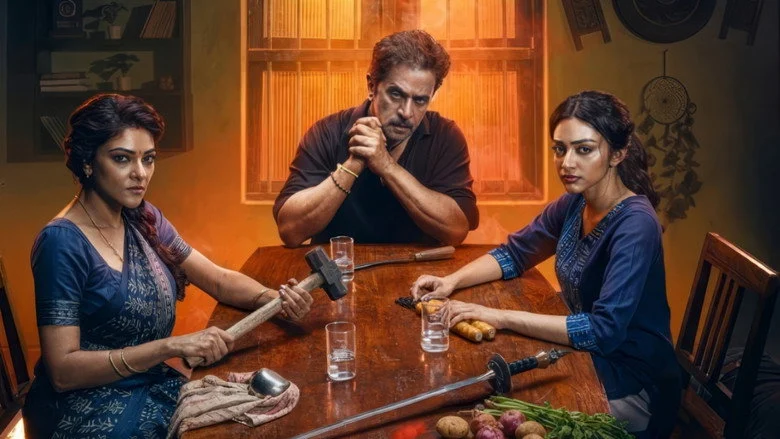
A middle-class family trained in martial arts watches their ordinary world collapse the moment danger arrives at their doorstep. What begins as a domestic setup spirals into an escalating battle for survival, forcing the household to weaponize everything they’ve learned, and everything they are, against forces closing in from all sides.
Subash K Raj’s *Blast* is a 3-hour-2-minute gamble that family drama and action choreography can sustain audience investment across a deliberately elongated runtime. The film banks on the premise that watching a household of fighters protect what matters will feel urgent enough to justify that length. Whether it delivers depends entirely on how much you trust that a martial-arts setup and escalating domestic threat can carry three hours without narrative filler.
**The three-hour commitment demands patience over payoff**
At 182 minutes, *Blast* makes an immediate statement about pacing philosophy: this is not a film designed for quick thrills or compact storytelling. The extended runtime signals that Raj intends the first act to build family texture, the middle to deepen the siege mentality, and the final stretch to deliver a confrontation that justifies the investment. Whether that pacing feels purposeful or indulgent will divide audiences sharply.
Viewers accustomed to action films that compress conflict into two hours may find themselves frustrated by a structure that treats setup as equally important as payoff. Conversely, those seeking character work alongside combat sequences may discover the additional time allows genuine emotional stakes to crystallize. The runtime is not neutral, it is a creative choice that either enriches or exhausts depending on execution.
**Martial-arts choreography carries the action-drama spine**
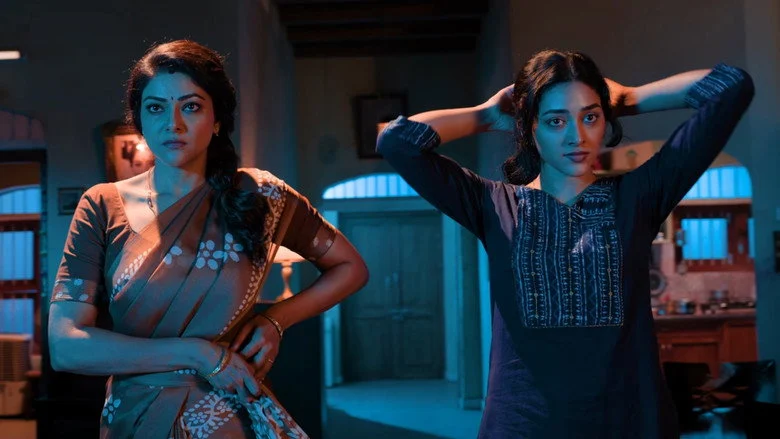
The core of *Blast* rests on a deceptively simple framework: a family trained to fight becomes a family that must fight. That premise requires the film’s action sequences to feel organic rather than inserted. Because the characters are presented as practitioners from the outset, their combat proficiency becomes characterization rather than convenient plot armor.
What matters here is whether the choreography reflects character variation, whether each family member fights with a distinct style, speed, and philosophy. The film’s three-hour structure allows room to demonstrate those distinctions across multiple confrontations rather than compress them into a single climactic burst.
The survival framework, rather than a revenge narrative, also changes how action functions. These are not sequences designed to show dominance but rather desperation, family members protecting each other under duress. That distinction shapes rhythm, blocking, and emotional weight in ways that separate *Blast* from standard action fare.
For those interested in how Tamil cinema approaches action within domestic drama, the foundation feels deliberate, though execution remains the proving ground. Tamil Action reviews often debate whether spectacle or character clarity matters more, and *Blast* appears designed to prioritize the latter.
**The supporting cast anchors ensemble dynamics without standalone recognition**
Preity Mukhundhan is listed in the cast, though the available information provides no character name or specific scene detail. Her presence signals that the household is not built around a single protagonist but rather distributed across family members, each with stakes and agency in the survival equation. That ensemble approach is directorial choice worth noting.
When action-drama films distribute screen time across multiple family members rather than centering a lone hero, the narrative burden shifts from individual performance to group chemistry. Mukhundhan’s inclusion without highlighted solo moments suggests the film trusts ensemble storytelling over star turns.
**A family thriller without critical consensus yet**
*Blast* arrives with minimal critical commentary available, which means audiences are stepping in without the comfort of consensus verification. That absence of established critical opinion is itself information: this is either a film critics have not yet assessed, or one not positioned as a prestige release requiring extensive review coverage.
For viewers who prefer navigating films without prior critical framing, that opacity can feel refreshing. For those who use critical guidance to vet investment, the lack of published opinion creates legitimate hesitation before committing three hours.
**The U/A certification positions *Blast* as family-accessible action**
A U/A 16+ rating on a three-hour action film signals that violence and threat are present but constrained within bounds that allow teenage viewers. That certification choice affects how the danger functions narratively. The threat feels real without descending into brutality that would demand an A rating.
For families considering this together, that certification removes one category of concern. For action purists expecting graphic intensity, it signals restraint built into the film’s DNA.
Go in if you value character-grounded action and have the patience for extended pacing. This is a theatrical experience designed to feel lived rather than rushed, and three hours spent with a household fighting to survive will either feel like earned engagement or exhausting repetition depending on your appetite for that particular narrative rhythm. Best experienced on a regular screen where the family dynamics have room to breathe.
*Blast* is a deliberate but unproven three-hour wager on martial-arts family drama that requires viewers to trust premise over prior critical confirmation, a 2.5/5 gamble worth taking only if ensemble action-survival appeals to you more than guaranteed crowd-pleasing spectacle.
Antony Varghese’s uneven action work in Kattalan review shares *Blast*’s struggle to balance character depth with combat momentum.
Like the chaotic ensemble dynamics of Pati Patni verdict, *Blast* bets on household tension sustaining a deliberately extended runtime.