
A family descends into criminal territory not through malice but through sheer incompetence and circumstance, their dysfunction the engine of both laughter and genuine dread. Jayaram moves through this chaos with the precision of an actor who knows exactly when to lean into panic and when to pull back, anchoring a film that could easily tip into shapelessness.
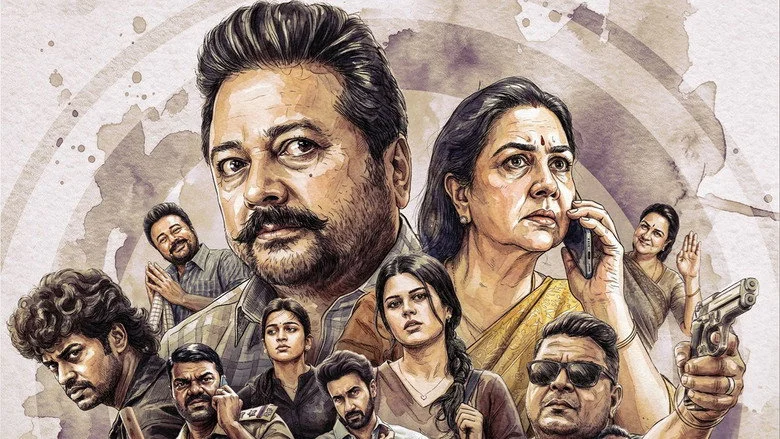
Pandiraj Balances Tonal Extremes with Uneven Precision
The director constructs a dark-comedy framework that demands the audience sit comfortably in both emotional discomfort and absurdist humor, a difficult needle to thread, and one the film threads with inconsistent success. The screenplay’s greatest strength is its willingness to let chaotic family interactions drive the narrative rather than impose artificial order, though the tonal shifts occasionally feel abrupt rather than organic.
Dark Comedy Meets Crime Thriller in Fractured Harmony
The film’s primary engine is familial chaos presented as both comedy and threat. Unpredictable situations are framed to carry simultaneous weight, a character’s poor choice lands as both laugh line and genuine consequence, forcing viewers to negotiate competing emotional registers moment to moment.
The crime-thriller elements exist not as heavy machinery but as the natural consequence of a family’s bad decisions compounding into genuine jeopardy. This tonal architecture, where humor and tension coexist without resolving into either melodrama or pure farce, requires actors to live in ambiguity.
George C. Williams’ cinematography supports this tonal balancing act without calling attention to itself, allowing the family’s cramped, chaotic spaces to feel authentically lived-in rather than production-designed. The 138-minute runtime suggests Pandiraj trusts the accumulation of smaller character moments over major setpieces to generate momentum.
Those seeking a broader range of Tamil film analysis will find value in exploring Tamil Crime reviews across multiple genres and directorial voices.
Urvashi, Mysskin, and Yogi Babu Navigate Ensemble Texture
Urvashi operates within the film’s fractured logic with the kind of specificity that suggests careful collaboration with Pandiraj on where the character’s breaking points live. Mysskin, working in what appears to be a supporting role, brings the kind of controlled intensity he favors, using stillness as a tool to register threat or judgment.
Yogi Babu’s casting signals the film’s commitment to ensemble chaos, his performances thrive in spaces where logic collapses, and the film seems built to let him operate precisely there. Sandy Master, Santosh Sobhan, Sanjana Krishnamoorthy, and Ananthika Sanilkumar round out a cast designed not for individual heroism but for collective deterioration.
Family Entertainment Without Easy Catharsis
The film is positioned for family and fan audiences seeking something darker than conventional Tamil comedy but not quite pessimistic enough to alienate viewers expecting some form of resolution. Regular theatrical presentation suits the film’s intimate cramped spaces and interpersonal texture far better than theatrical expansion would serve it.
Parimala & Co works best when you accept it as a film more interested in depicting a family’s slow unraveling than in providing moral clarity or narrative neatness. Jayaram’s grounded performance keeps the absurdity tethered to something recognizable, and Pandiraj’s direction refuses easy tonal resolution, it’s a film that trusts its audience to sit in discomfort. Watch it in theaters if you value ensemble dynamics over spectacle.
I found the film’s central gamble, that a family’s dysfunction can simultaneously devastate and amuse, to be largely successful, even when the tonal machinery occasionally seizes, earning it a solid 3.5 out of 5.
Rao Bahadur similarly mines dark comedy from institutional and familial pressure with Rao Bahadur review.
Monkey In A Cage also builds its thriller framework around performer vulnerability and Monkey Cage verdict.





1 thought on “Parimala & Co (2026): Jayaram Anchors Dark Comedy Through Controlled Chaos”
Comments are closed.