
In 1980s rural Andhra Pradesh, a spirited village leader named Peddi stands against a powerful rival threatening his community’s survival and pride. The entire settlement becomes the true protagonist here, mobilizing through sport as their weapon of resistance, a premise that demands the full three-plus hours Buchi Babu Sana allocates to it, testing whether audience patience matches the film’s ambition for mass dignity.
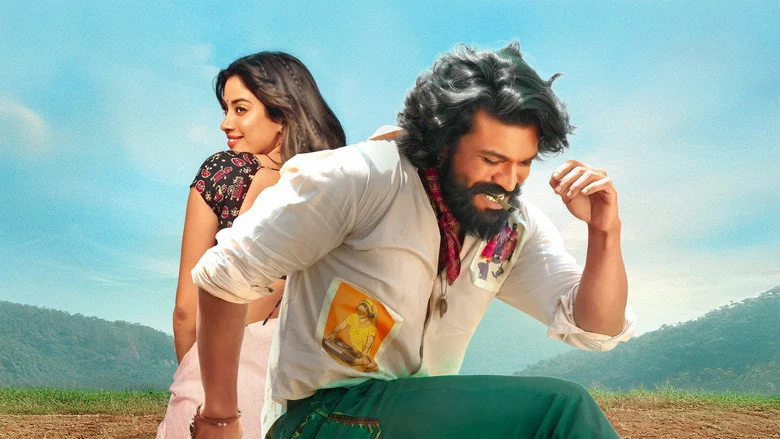
Ram Charan’s Resistance Carries the Village’s Weight
Ram Charan anchors Peddi not as a lone action hero but as a community representative whose authority rests on collective trust. His transformation from spirited villager to defiant leader frames the emotional arc more than any individual combat sequence. The role asks him to hold scenes through leadership presence rather than star charisma alone.
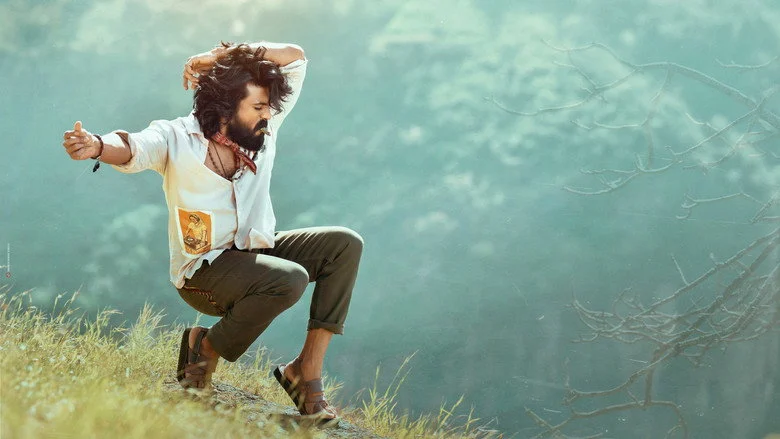
Buchi Babu Sana’s Period Grounding Fights Against Length
Director Buchi Babu Sana structures the narrative around clear three-act escalation: oppression, mobilization, confrontation. The 1980s rural setting anchors the social hierarchy convincingly, and the sports-as-resistance device feels fresher than typical mass-drama frameworks. Yet a 189-minute runtime demands that every sequence justify its placement, and not all sustain that weight evenly.
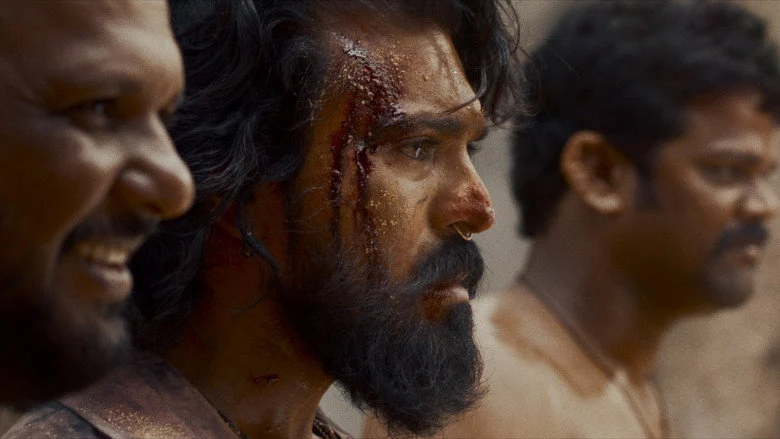
Sports Drama Built on Community Rather Than Individual Glory
The film’s centerpiece is the village-unification montage where sport becomes the mechanism binding fragmented individuals into collective resistance. This sequence carries the thematic spine of the entire film: dignity flows through community action, not heroic isolation. The emotional turning point explicitly reframes the struggle as one of pride and shared identity.
The public confrontation between Peddi and the powerful rival functions as climactic release, the moment where sustained tension finally breaks into action. The setup across two hours makes this collision feel earned rather than arbitrary. The film believes that mass movements require narrative investment before explosive payoff.
Action sequences emerge here not as spectacle but as expressions of collective defiance. The geography of confrontation privileges crowd dynamics and unified participation over individual stunt heroics. This thematic choice consistently shapes how violence and resistance are framed throughout.
Our appreciation for this approach hinges entirely on whether the village’s struggle resonates as genuinely personal rather than merely symbolic, and that emotional foundation must survive the extended runtime without repetition wearing it thin.
For those seeking more of this director’s approach to social conflict through genre storytelling, Telugu action reviews explore the spectrum of how mass cinema balances individual and collective stakes.
Janhvi Kapoor and Supporting Ensemble Anchor Community Stakes
Janhvi Kapoor’s presence as a principal cast member signals the film’s attempt to balance mass-audience appeal with intimate emotional stakes, though her specific character function remains undefined in available material. The ensemble, including Shiva Rajkumar, Jagapathi Babu, Divyenndu Sharma, and Boman Irani, functions less as distinct personalities and more as representatives of village hierarchy and collective resistance.
A ₹350 Crore Gamble on Period Sports Drama Authenticity
With a reported budget of ₹350 crore, Peddi represents a substantial investment in rural-period action-drama territory traditionally dominated by larger-scale spectacle films. The premium-format release strategy and extended runtime suggest the producers expect the village setting and sports mechanics to justify theatrical scale. Whether that confidence translates to audience embrace remains the only question that matters for a film betting this heavily on period authenticity over franchise familiarity.
This is a film built for viewers who trust that three hours spent in 1980s Andhra Pradesh resistance can feel more urgent than faster-paced alternatives. If you value character-driven mass cinema and period grounding, the investment may reward your patience. The runtime, however, demands you arrive with expectations calibrated to slow-burn community drama rather than explosive action spectacle. Watch it in IMAX or a large premium format if available, the village landscape and crowd sequences deserve that visual real estate. Peddi succeeds as a deliberate, community-centered mass drama when viewers accept its leisurely approach to collective dignity, earning a solid 3.5/5 for ambition that mostly sustains across its considerable length.
Buchi Babu Sana’s commitment to viewing the village as protagonist mirrors the thematic choices in അവ ച review, where collective stakes override individual heroics.
Both Peddi and Habeebi verdict ground their mass narratives in specific regional identity and community belonging rather than pan-Indian spectacle.




1 thought on “Peddi (2026): Ram Charan s lifts key stretches, not the full runtime”
Comments are closed.