A conservative Telugu boy and an Anglo-Indian girl lock eyes in a Perambur lane. Within seconds, the trailer cuts to a screaming argument about forced religious conversion. Pari Elavazhagan, director and lead actor, is not here to play it safe.
This is a sophomore film that announces itself through its conflict, not its charm. The decision to weave a social landmine into a romantic comedy is the kind of risk that either electrifies a small film or crushes it under its own weight. We are in the latter territory, barely.
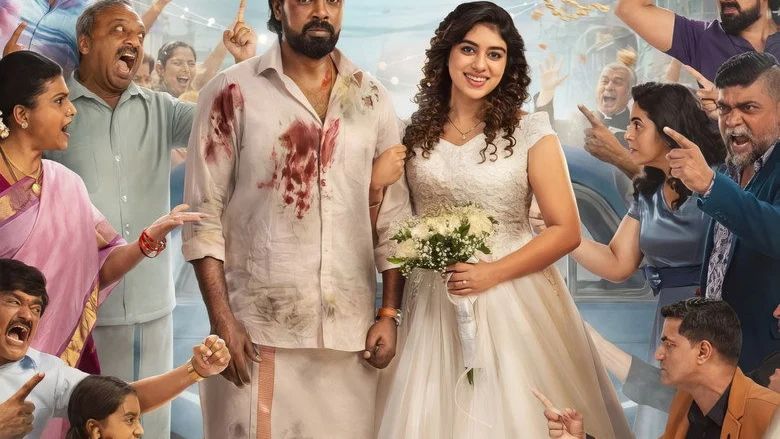
Ramya Ranganathan: The Only Anchor in Chaotic Waters
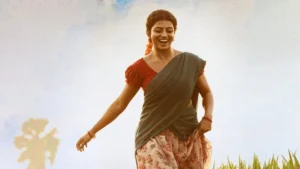
Ramya Ranganathan plays the Anglo-Indian girl with a natural ease that the script does not deserve. In every early scene set in the neighborhood, she manages to sell the allure of a cross-cultural spark even when the dialogue feels written by a committee.
She carries the emotional weight of the forced conversion subplot almost entirely alone. The film asks her to be both a romantic beacon and a social flashpoint, and she does it without breaking a sweat. Pari, as her co-star, looks visibly lost next to her.
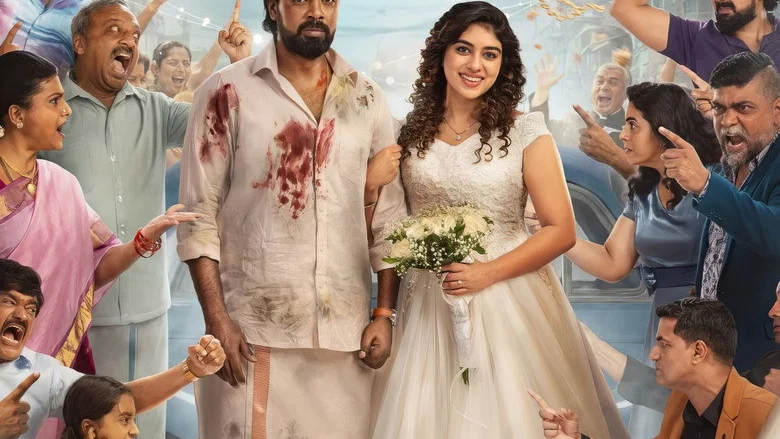
Pari Elavazhagan: The Director Who Painted Himself Into a Corner
Elavazhagan’s direction shows one clear strength: he captures the texture of Perambur with an authentic, lived-in eye. The streets, the local gossip, the rhythm of daily life, these feel genuinely observed, not manufactured for a set.
His weakness is structural. The screenplay introduces a religious conversion controversy in Act 2 and then has no idea what to do with it. The conflict is established, argued about, and then… left hanging. The third act, based on available plot data, simply never resolves the bomb it lit.
This is a director who understands atmosphere but cannot yet build narrative scaffolding. The ambition is admirable; the execution is a fractured mess.
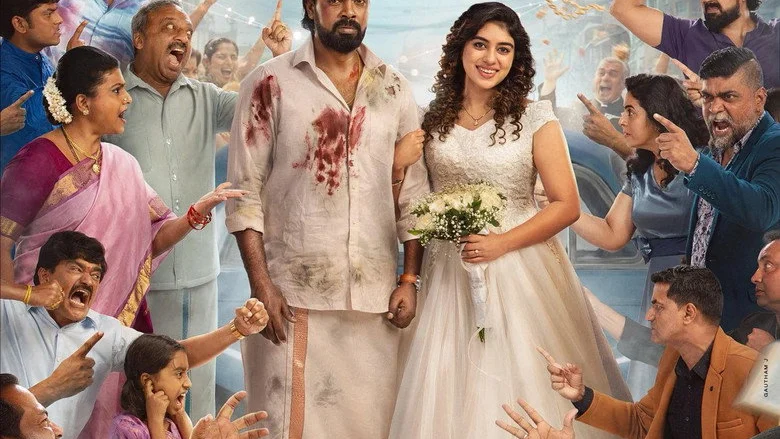
Cross-Cultural Romance Meets a Social Hand Grenade
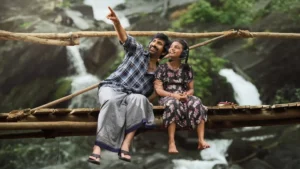
As a romantic comedy, Anbe Diana stumbles from the start. The chemistry between the leads is built on montage scenes, grinning at each other in a market, walking through lanes, rather than actual dialogue or conflict. The comedy, when it arrives, feels forced into gaps between the drama.
The forced religious conversion subplot is the film’s central risk, and it is handled with the finesse of a sledgehammer. The trailer scene that introduced it sparked genuine social debate, but the full film never earns that weight. It presents the argument without the narrative payoff.
Family traditions and rivalries provide predictable friction, but they are resolved too quickly to feel meaningful. The film wants to be a conversation starter about prejudice, but it lacks the courage to see the conversation through to a messy, honest end. It pulls its punches.
Roja Selvamani and Ismath Banu: Wasted in the Margins
Roja Selvamani appears in what seems to be a pivotal family-opposition role. Her presence signals a generational clash that the film promises but never fully dramatizes. She has one moment of sharp dialogue that suggests she could have been the film’s moral center, but the script abandons her character midway.
Ismath Banu gets even less. Her casting feels like a gesture toward layered community dynamics, but she disappears into the background after a single scene. For a film that prides itself on representing Perambur’s diversity, it squanders its supporting women.
Those interested in how contemporary Tamil cinema is tackling social themes in commercial frames should browse Tamil Comedy reviews for comparison.
Audience Reception: A Conversation That Fizzled
Since the film released the same day as this review, critical ratings are still forming. But early social media buzz from previews suggests the forced conversion theme has polarized viewers. Some praise the intent; others accuse it of being a shallow provocation for a poster, not a film.
Without box office data yet, the real test lies in word-of-mouth. This is a film that generates discussion about its premise, but rarely about its craft. That is a dangerous sign for a romantic comedy, once the controversy fades, what is left to enjoy?
The ambition to tackle forced religious conversion inside a romantic comedy is laudable, but the film lacks the structural spine to pull it off. Watch it if you are a student of how Indian cinema mishandles social issues, otherwise, skip the ticket and wait for the debate to play out online. A regular theatrical screen is the only format that matters here.
Anbe Diana is a noble failure that deserves a generous 2 out of 5, for the neighborhood texture and Ramya Ranganathan’s charm, and nothing else.
For a more coherent take on a director returning to familiar territory, read our review of Varavu review.
If you want a comedy that actually understands its genre mechanics, check out Dhamaal 4 verdict.