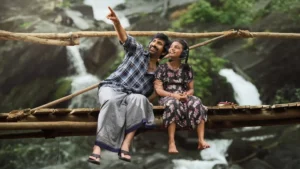
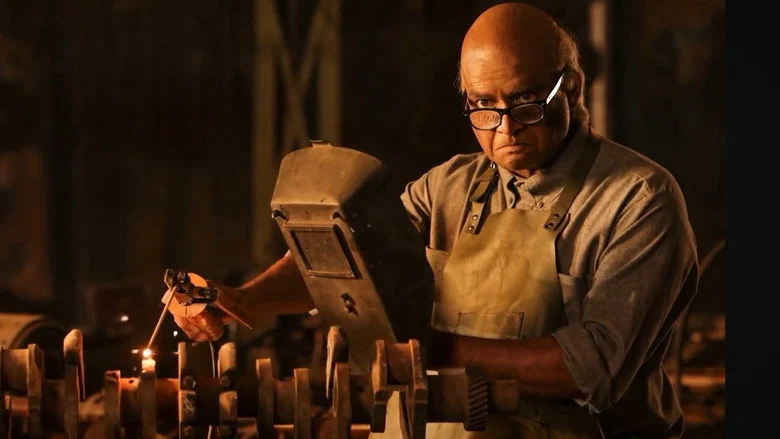
G.D. Naidu, the ‘Edison of India’, once pointed at a machine he built and declared it would turn the nation’s wheels. Krishnakumar Ramakumar’s camera catches that moment, R. Madhavan tilting his chin upward, conviction hardening his jaw. It is a fine performance, but the film’s reverence for its protagonist becomes a cage. We see a saint of invention, not a man who doubted, sweated, or failed.
Krishnakumar Ramakumar’s Well-Intentioned Straitjacket
The director and his co-writer R. Madhavan have clearly researched Naidu’s life with academic zeal. The screenplay moves chronologically, dutifully checking milestones. What it lacks is dramatic friction, the kind that turns biography into cinema. One wishes for a single scene where Naidu loses his temper or makes a cynical trade-off. The film’s core conflict, powerful forces trying to silence his vision, is stated but never felt as visceral threat.
The Biographical Drama Hits a Repetitive Note
This is a film built on montages of doors being closed and Naidu refusing to knock elsewhere. The antagonists remain faceless, embodying “the system” but never individual menace. Sathyaraj and Jayaram appear in functional roles, delivering exposition about colonial bureaucracy and patent laws. Their performances are reliable but not transformative, serving the plot rather than energizing it.
Priyamani has little to do beyond playing the supportive, worried wife. It is a thankless role that the film never interrogates. Dushara Vijayan and Aditi Balan are barely visible. It is frustrating to see talent wasted on characters that could have been written as post-its. Yogi Babu appears for comic relief that feels mechanically inserted, offering tonal inconsistency when the film is at its most earnest.
I found myself wishing for the film to pause on one invention and show the grime of trial and error. Instead, it leaps from breakthrough to breakthrough, as if Naidu’s mind never had to wrestle with doubt. The biographical drama format here lacks the texture of craft, no lingering on workshop sounds, no close-ups on mistake-ridden hands. It is a polished surface over a hollow workshop.
The Supporting Cast: Faces That Signal Intent
Carl Andrew Harte appears briefly as a colonial official, and his casting signals the film’s desire to critique British-era suppression of indigenous innovation. But the scene is too brief to land. Jayaram, playing a lawyer or sympathetic bureaucrat, delivers a single monologue about visionary genius, and it is the film’s most didactic moment. Sathyaraj, as an old friend or mentor, brings dignity but no scene that crackles. Each supporting performance hints at a more interesting film, one that might have let these characters disagree with Naidu rather than admire him.
The Audience Must Bring Their Own Passion
Since no critical or audience responses are yet available, the film releases today, the reception remains an open question. Early trade signals suggest moderate advance buzz, driven by Madhavan’s casting and the rarity of a Tamil invention biopic. But the buzz feels cautious, not eruptive. The film might find its audience among those who already revere Naidu, but it likely won’t convert skeptics. This is a risk-led project that bets on historical reverence outweighing the need for cinematic surprise.
For those seeking more depth from Tamil cinema, our Tamil Drama reviews offer sharper narratives.
G.D.N. (2026) means well but plays it safe. It is a watch for history buffs and Madhavan devotees, but a skip for anyone seeking the messy, electric heart of a true inventor’s life. See it on a streaming platform where patience is easier to sustain.
G.D.N. earns a generous 2.5 out of 5, the extra half star earned only by Madhavan’s commitment.
For a more instrumentally sharp look at ambition, read our review of Oh Sukumari review.
Contrast this reverent tone with the grounded warmth of Mister Middle verdict.