
There’s a stretch in Irumudi where Ravi Teja’s Trinadh Rama Kasu simply sits with his daughter Mani, played by Baby Nakshathra, and the film stops being a commercial product. It becomes a conversation between two people who’ve learned to read each other’s silences. That’s the version of this action drama worth discussing.
Shiva Nirvana, working with Mythri Movie Makers, has built a film that wears its emotional ambitions on its sleeve. The father-daughter bond isn’t a subplot here, it’s the entire architecture, with the action elements awkwardly bolted on around it.
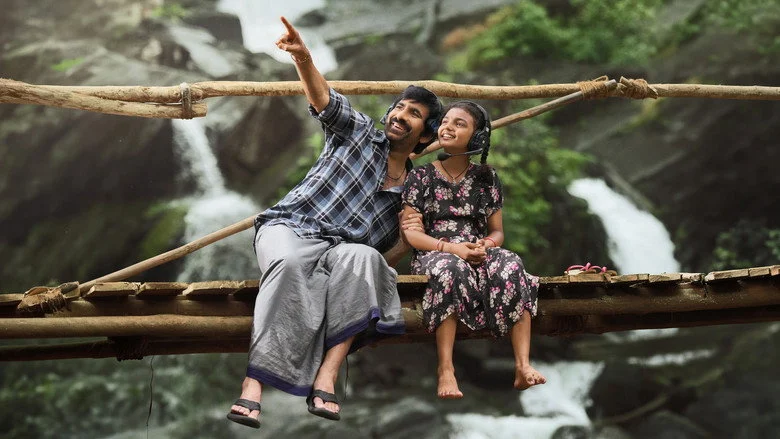
Ravi Teja discovers a new register in fatherhood
Ravi Teja has spent decades perfecting the mass hero template, but Irumudi asks him to soften. His scenes with Baby Nakshathra carry a tenderness that feels earned rather than performed. The way he adjusts his physicality, smaller gestures, quieter reactions, signals an actor willing to serve the story.
His best moments arrive when he’s not delivering punchlines but simply listening. The emotional portions between them are the film’s most consistently praised material, and it’s not hard to see why.
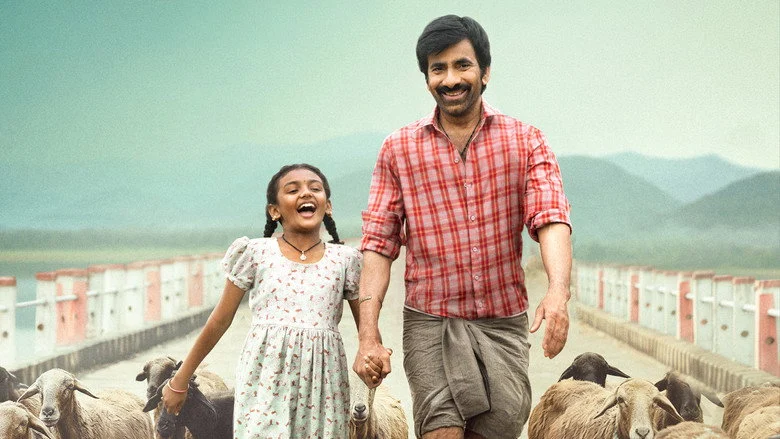
Shiva Nirvana’s direction finds sincerity but loses momentum
Nirvana’s handling of the family drama shows genuine conviction. He shoots these scenes with patience, letting the actors find the beats instead of forcing them. The screenplay’s emotional spine, a man rediscovering what it means to be a father, is communicated with clarity.
But the commercial-action portions feel like they belong to a different movie. The transition from intimate drama to mass spectacle is jarring, and the pacing suffers whenever the film tries to serve both masters. It’s a structural flaw that keeps Irumudi from being fully cohesive.
The film’s sincerity is its saving grace, even when the packaging doesn’t match the content inside.
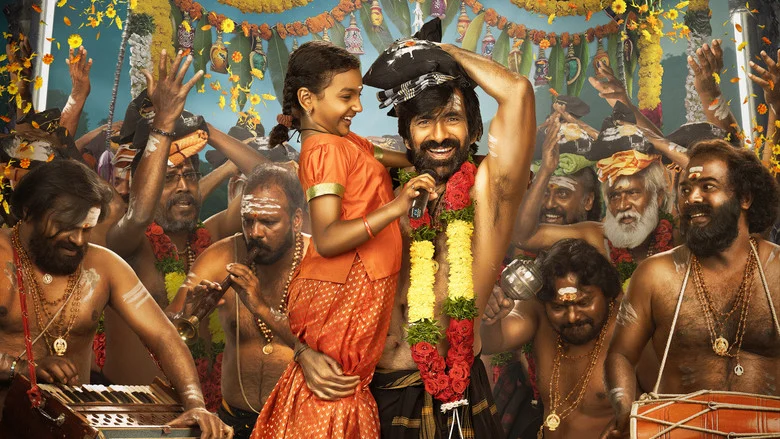
Genre execution: an action drama that prefers tears to triggers
The action elements in Irumudi are functional but forgettable. There’s no setpiece that demands to be rewatched, no stunt choreography that announces itself. The film’s real action sequences happen in the silences between dialogues, in the quiet exchanges where a father and daughter negotiate their relationship.
What the film lacks in spectacle, it compensates with emotional stakes. The father-daughter scenes function as the film’s true setpieces, carefully staged, emotionally calibrated, and grounded in performance rather than pyrotechnics.
For a genre that typically runs on adrenaline, Irumudi makes a curious choice: it runs on heart. That’s either its boldest decision or its most commercially risky one, depending on your appetite for mass entertainment.
Baby Nakshathra anchors the film’s emotional core
Baby Nakshathra’s Manikanta, called Mani, or Manimma, is the film’s most discussed performance after Ravi Teja. Her chemistry with the lead actor is repeatedly cited as the film’s primary strength, and the material gives her genuine moments to shine rather than reducing her to a prop.
Priya Bhavani Shankar brings a grounded presence as Kaveri, though the research doesn’t offer scene-specific observations. Sai Kumar’s Guruswamy Goparaju adds weight to the supporting cast, and Ajay Ghosh and Ramesh Indira fill antagonist-adjacent roles that service the plot without leaving a distinct mark.
The audience question: who is this for?
Irumudi appears to be targeting Ravi Teja’s existing fanbase while hoping to pull in viewers who prefer family dramas. The praise for the emotional content suggests it’s succeeding with the latter, but the film’s commercial-action elements haven’t generated the same enthusiasm.
There’s a version of this film that commits fully to its family-drama instincts and becomes something special. The version we have hedges its bets, and that hedging shows. For audiences expecting a pure mass-action spectacle, the film may disappoint. For those open to an emotion-led Telugu action drama, there’s genuine value here.
I find myself wishing the film had trusted its emotional instincts more, the father-daughter material is strong enough to carry the entire runtime.
For more on how Telugu cinema is handling family dynamics within commercial frameworks, browse our Telugu Drama reviews.
Verdict: a family drama wearing an action film’s clothes
Irumudi works best when it stops pretending to be something it isn’t. The emotional core, Ravi Teja and Baby Nakshathra’s relationship, is the film’s reason to exist, and it delivers on that front. The action elements feel like obligations rather than opportunities, and the film’s identity crisis keeps it from greatness.
Watch it for the father-daughter scenes, which are genuinely affecting. Skip it if you need your action drama to deliver consistent adrenaline. Regular theatrical viewing is fine, though this is a film that would play just as well on streaming.
Irumudi is a sincere fatherhood drama that deserves credit for its emotional conviction, even if its commercial packaging doesn’t match its soul, a solid 3 out of 5.
For a different take on family bonds tested by circumstance, see how Second Marriage review handles restraint.
And if you’re curious about risk-taking in Telugu cinema, Toxic verdict offers a bolder gamble.





1 thought on “Irumudi (2026): Ravi Teja’s Fatherhood Drama Finds Its Soul in Quiet Moments”
Comments are closed.