The conflict between humans and animals in coastal Karnataka is the film’s stated core, but it’s the real-world fight between Prajwal Devaraj and director Gurudatha Ganiga that has drawn more attention. A police complaint over a ‘six-pack’ clause, a dubbing dispute, and withheld dues have made this action-adventure drama’s journey as messy as its narrative.
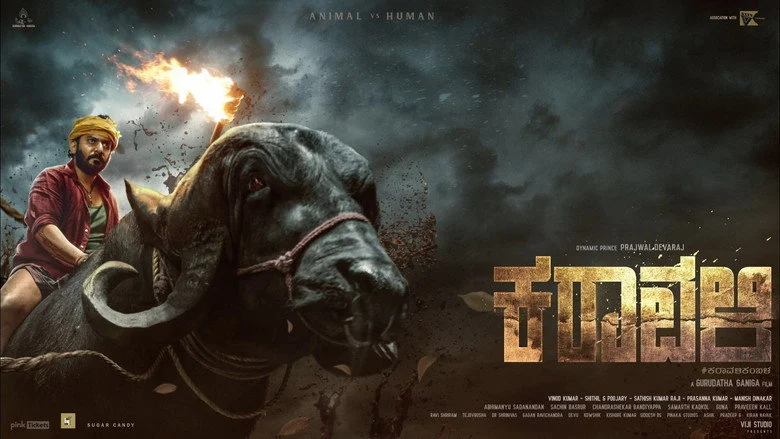
Prajwal Devaraj: A Lead Buried by Off-Screen Noise
The actor’s reported objection to his character’s dubbing without consent suggests a performance he didn’t fully own. On screen, his presence is committed but hollowed out by a role that offers little beyond physical posturing against the Kambala backdrop.
Devaraj’s work feels like a placeholder for a star turn that never arrives. The script, credited to Ganiga and Ravi Sriram, leaves him stranded in scenes demanding gravitas he can’t supply.
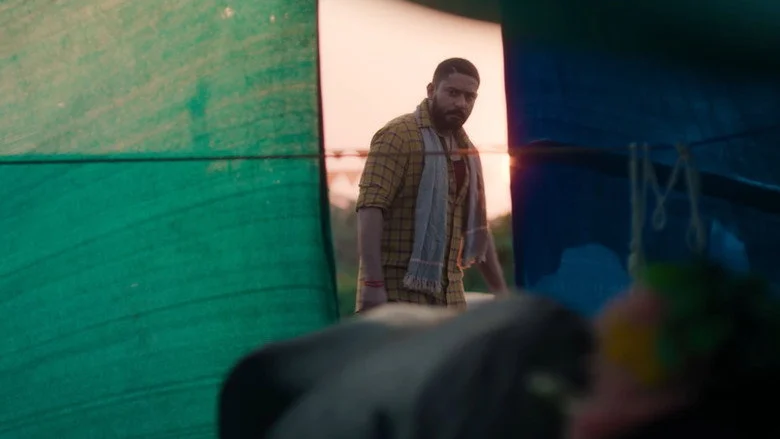
Direction and Screenplay: A Confused Canvas
Gurudatha Ganiga’s direction leans heavily on the cultural weight of coastal Karnataka and the traditional buffalo race, but the screenplay lacks a coherent through-line. The thematic promise of indigenous identity versus nature is introduced, then abandoned for generic action beats.
Its biggest flaw is a lack of narrative momentum: the film meanders from one setpiece to another without building stakes. The writing never commits to either the human drama or the environmental conflict, leaving both half-baked.
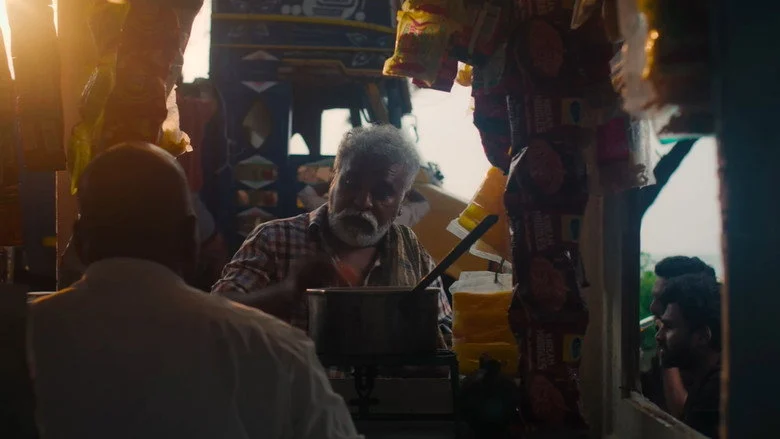
Genre-Core Execution: Action Without Geography
As an action-adventure drama, Karavali must sell its physical stakes through clear choreography and spatial logic. The Kambala race, a visceral centerpiece, is shot competently but lacks the kinetic geography that makes such sequences breathe. You rarely feel the dust or the danger.
The action beats are functional at best, punches and chases that land with thuds instead of impact. Without scene-level references to anchor these moments, the craft feels anonymous, a checklist of genre requirements rather than a director’s vision.
The drama, too, suffers: emotional turning points are rushed, and the ecological theme feels like a talking point rather than a lived conflict. The rural setting is picturesque but never becomes a character in its own right.
Supporting Cast: Color but No Depth
Raj B. Shetty, a formidable talent in Kannada cinema, is underutilized in what appears to be a supporting role that demands little more than his presence. His casting signals an ambition the film can’t fulfill, he’s there for weight, not substance.
Sampada Hulivana and the ensemble, including Ramesh Indira and Govinde Gowda, deliver serviceable performances in roles that are sketched, not written. Sushmitha Bhat and Mitra appear only to service plot mechanics, their moments unmemorable.
The film’s refusal to develop its supporting characters, especially the unnamed antagonist, robs it of dramatic friction. Every actor is a prop for a story that doesn’t know what story it wants to tell.
For those intrigued by the cultural landscape but left wanting, browse more Kannada Action reviews to see how other films handle rural grit and genre craft.
The Controversy Becomes the Story
The dispute over Devaraj’s ‘six-pack’ clause and the subsequent police complaint has dominated pre-release conversation. It’s a rare case where the film’s gossip outshines its content, and for a work that should stand on its own, that’s a damaging sign.
Audience reception, based on available sentiment, suggests frustration: those expecting a rooted, Kambala-focused drama have found a generic actioner instead. The film’s risk, marrying cultural specificity with mass appeal, has paid off in neither direction.
I’d argue that the whole enterprise feels like a missed opportunity. The talent involved deserved a sharper script, and the cultural turf deserved more than a backdrop.
If you must watch, a standard theater screening is fine, the visuals don’t demand more. But brace for a film that fights itself more than it fights for its audience.
Karavali is a watch only for completionists of Kannada action cinema, I’d rate it a generous 2 out of 5 for its ambition, but the execution earns barely a 1.5.
For a more assured blend of rural drama and legal tension, Sathyavan Savithiri review offers a sharper courtroom edge.
Those seeking a performance-driven thriller might prefer LURK verdict, where Saiju Kurup carries the runtime.