Summer Holidays (2026): Srikar Nayan’s Godavari Childhood Drama Strikes a Nostalgic Chord, But Flat Narration Limits Its Emotional Payoff
By Bappam TV Editorial Team
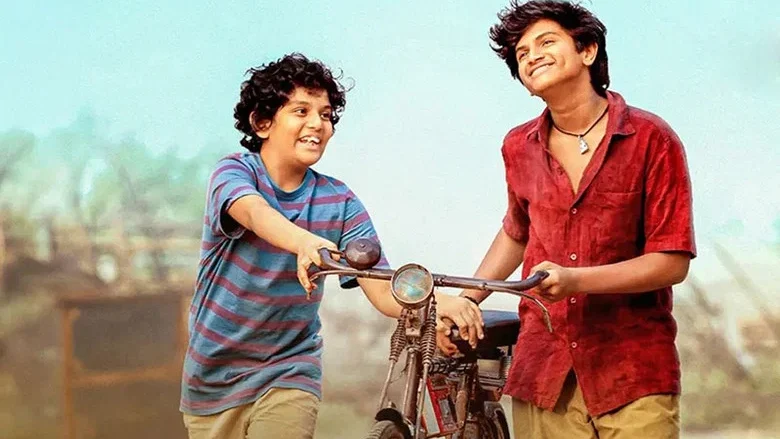
The opening night crowd at the multiplex wasn’t there for spectacle. They had come for the specific, almost forgotten texture of a Godavari summer in 2000, the heat, the mango orchards, the grandparents’ verandah, and Srikar Nayan’s film delivers that atmosphere with a sincerity that is hard to dismiss.
What it struggles to deliver is the dramatic engine to match it.
When A City Boy Meets A Village Boy, The Screenplay Already Knows The Ending
The setup is clean and familiar. RV arrives from Hyderabad to his grandparents’ village, a soft city boy dropped into a world of red earth and riverbanks, and KV is the local child whose summer is defined not by play but by the need to earn money for a saree for his mother.
That contrast, privilege versus hardship, leisure versus labour, is the film’s strongest structural idea, and it is introduced with a restraint that suggests Nayan understands how to stage a social divide without turning it into a lecture.
The problem arrives quickly after. The screenplay, credited to a writer whose name the production has kept conspicuously quiet, moves through its beats with the predictability of a school timetable. The boys meet, they bond, they adventure, they face a test. You can set your watch by it.
The Friendship Works Because The Child Performers Refuse To Perform
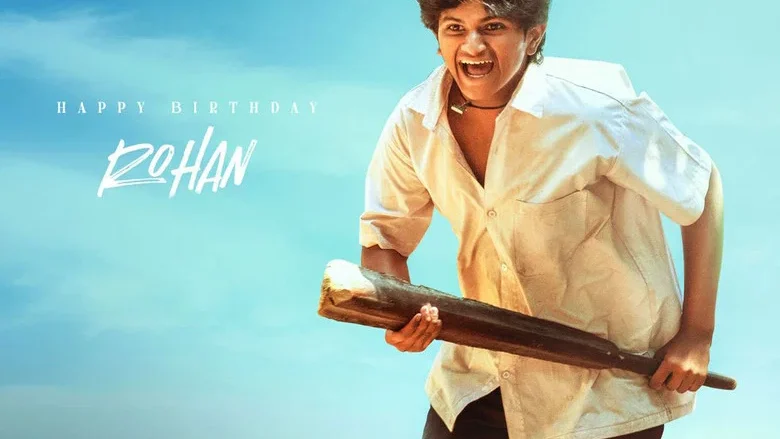
Rohan Roy Gunti, playing KV, is the film’s live wire. His energy is not the manufactured cuteness of a child actor hitting marks; it is the restless, slightly chaotic physicality of a boy who has learned that sitting still does not put food on the table.
Watch him in the early scenes where he negotiates the price of his labour, the way he squares his shoulders, the quick calculation in his eyes before he speaks. It is a small, precise piece of screen acting, and it gives KV a dignity that the script does not always earn for him.
Arun Dev’s RV is the quieter counterweight, and his work is best in the moments of observation, the city boy watching KV do something ordinary with a focus that suggests he is learning something about the world. His sincerity is real, though the screenplay gives him fewer opportunities to complicate it.
Their scenes together, particularly the mango orchard sequences and the riverside stretches, carry the film’s emotional weight. The camera keeps them at a slight distance, letting their dynamic breathe without forcing it into sentimentality.
Jayasudha’s Grandmother Is The Film’s Emotional Anchor, Even When The Script Forgets Her
Jayasudha, as RV’s grandmother, does something quietly valuable. She does not play the role as a repository of wisdom or a comic foil; she plays it as a woman who has learned to hold a household together with small, repeated gestures.
There is a scene where she watches RV eat, her hands folded in her lap, her eyes moving between him and the doorway. It is a small moment, but it carries the film’s intergenerational weight more effectively than any dialogue about family values.
The supporting cast around her, the village elders, the relatives who drift in and out of the frame, are given little to do beyond filling the background. Their presence is atmospheric rather than dramatic, and the film’s refusal to develop them leaves the adult world feeling thinner than the children’s.
The Godavari Village Is A Character, But The Camera Sometimes Forgets To Look At It
The film’s visual design is its most consistent pleasure. The rural Godavari locations, the orchards, the river, the narrow lanes between houses, are shot with a warmth that suggests genuine familiarity rather than tourist curiosity.
The period detail is handled with a light touch. The summer of 2000 is evoked through small things, the texture of a school bag, the sound of a radio, the way children play without screens, rather than through heavy-handed signposting.
Where the direction falters is in its pacing. Nayan allows scenes to linger past their emotional usefulness, particularly in the middle section, where the film mistakes atmosphere for momentum. The narration, flat and unhurried, does not build the pressure that the boys’ circumstances demand.
The music, which audiences have responded to warmly, does much of the heavy lifting in these stretches. It is pleasant, melodic, and entirely unsurprising, it supports the mood without ever challenging it.
The Climax Resolves A Conflict The Film Never Fully Committed To
The final act brings the boys’ friendship to a test, but the film has spent so much time in nostalgic drift that the emotional stakes feel thinner than they should. The resolution is feel-good in the way that a summer memory is feel-good, warm, soft-edged, and slightly out of focus.
There is no villain here, and that is not the problem. The problem is that the film’s social pressures, academic expectation for RV, financial hardship for KV, are introduced as obstacles but never fully dramatised as forces that could actually break the friendship.
The result is a climax that resolves cleanly but does not linger. You leave the theatre with the atmosphere, not the argument.
Panorama Studios And The Commercial Arithmetic Of A Small Telugu Drama
The film arrives in theatres with modest expectations. Its opening day India net of ₹0.16 crore across 394 screens, with 13.1% occupancy, suggests a release that is being positioned as a niche family offering rather than a broad commercial play.
For the producing banner, the calculation is clear: this is a film that will live or die on word-of-mouth within family audiences, particularly in the Telugu states where the Godavari setting and the nostalgia factor carry genuine cultural weight.
The absence of a major star or a high-concept hook means the film’s theatrical window will be short. Its real life will likely be on streaming, where the slow pacing and gentle emotional register will find a more forgiving audience.
The Verdict: A Film That Remembers Childhood Better Than It Dramatises It
Summer Holidays is not a failure of ambition. It is a failure of escalation. The film knows exactly what it wants to feel like, the warmth of a remembered summer, the ache of a friendship that crossed a social divide, but it does not know how to build that feeling into a story that earns its emotional payoff.
What remains is the texture: the village, the boys, Jayasudha’s quiet presence, and the specific, almost physical sensation of a summer that once felt endless. That is not nothing.
But a film about the pressures that shape childhood needs to let those pressures bite. This one soothes them instead, and in doing so, it leaves you with a memory of a movie rather than the thing itself.
This stylistic discipline reflects a welcome evolution across contemporary telugu dramas, prioritizing character conviction over easy commercial formulas.
Related Articles
Angelina (2026): Vinoth Kishan Anchors a Lopsided Romance-Turned-Investigation

Raamaayan: Rise of a Legend (2026): Ranbir Kapoor’s Divine Burden and Yash’s Magnetic Menace

Nooru Kodi Vaanavil (2026): Harish Kalyan Anchors a Craft-Led Romance That Buries Its Own Conflict

Mookuthi Amman 2 (2026): Nayanthara’s Dual Divine Gamble Tests the Limits of Devotional Fantasy
Disco (2026): Antony Varghese Anchors a Sprawling Cautionary Tale That Loses Its Own Rhythm
Scene (2026): Suriya Anchors a Darkly Comic Police Procedural That Loses Its Grip in Translation