Angelina (2026): Vinoth Kishan Anchors a Lopsided Romance-Turned-Investigation
By Bappam TV Editorial Team
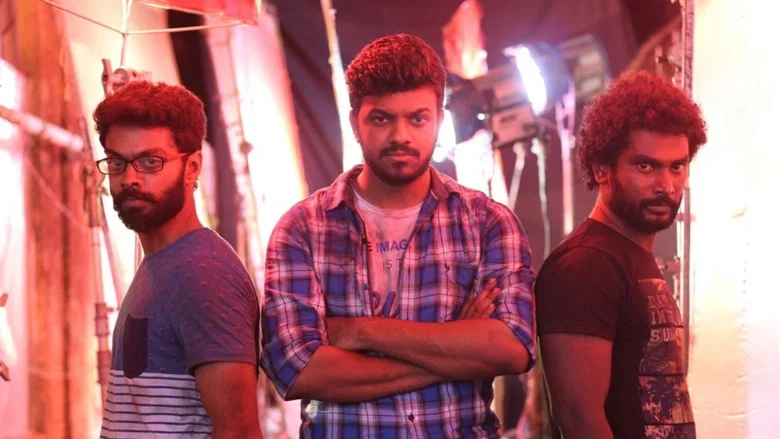
Angelina opens on a college campus that feels less like a place of study than a stage for a wager. A spirited student hands a local man a six-month deadline to win her heart, and the film settles into a breezy romantic rhythm.
Then the floor drops out. Angelina is found critically injured, the police have twenty-four hours to name a perpetrator, and everyone she trusted becomes a suspect.
A Six-Month Courtship That Collapses Into a Twenty-Four-Hour Dragnet
The structural pivot is the film’s most distinctive asset. A timed romantic challenge gives way to a timed criminal investigation, and the screenplay wrings genuine tension from the inversion.
Where the director’s earlier work on Summer Holidays leaned on nostalgia as a cushion, this film strips the warmth away once the injury lands. The tonal whiplash is deliberate, and for a while it works.
The suspect pool is drawn from Angelina’s own circle rather than an external criminal network. That choice gives the mystery an intimate cruelty that generic procedurals rarely manage.
Vinoth Kishan Holds the Frame While the Script Fumbles Its Own Deadline
Vinoth Kishan carries the investigative weight with a physical stillness that reads as exhaustion rather than stoicism. Watch his hands during the interrogation beats, they stay flat on the table, never fidgeting, as if the character has already accepted the worst outcome.
The restraint recalls the grounded, salt-air weariness Soori brought to Mandaadi, though Kishan’s register is cooler and more guarded. He gives the procedural sections a pulse the screenplay doesn’t always earn.
Monica Chinnakotla, as the central figure, has the harder task: she must be magnetic enough to justify the courtship wager and fragile enough to anchor the later investigation. The early scenes ask her to charm on cue, and she does, but the script never lets her rage or grieve with the same specificity.
The Twenty-Four-Hour Clock Runs Out of Momentum Before the Third Act
A compressed investigative window should generate relentless forward pressure. Here, the middle stretch sags under the weight of too many suspects who never fully individuate.
The film wants the audience to feel the claustrophobia of a trusted circle turning hostile, but the supporting ensemble blurs into a collective of anxious faces rather than distinct threats. The suspicion feels procedural rather than personal.
The tonal shift from romance to crime is handled with more confidence than the resolution. The screenplay resists the kinetic sensationalism that overtook Nooru Kodi Vaanavil, opting instead for a deliberate, almost suffocating dread.
Camera Framing and Silence Do the Heavy Lifting the Dialogue Cannot
The cinematography favors tight, unflattering framing during the investigation, faces pressed close to the frame edge, backgrounds swallowed by shadow. It’s a visual language of entrapment, and it suits the material.
Silence is deployed strategically in the interrogation rooms, where the absence of score lets the clock on the wall become the loudest element. The editing in the first half, however, lingers too long on romantic beats that the later investigation renders irrelevant.
The pacing betrays the premise’s own urgency. A twenty-four-hour deadline should feel like a sprint, but the film often walks.
A Contained Drama That Tests the Limits of the Regional Remake Pipeline
The producing banners behind Angelina are betting on a mid-budget drama with a structural gimmick rather than star-driven spectacle. That’s a risky wager in a market where theatrical footfalls increasingly favor event cinema.
The film’s commercial viability depends on whether audiences will accept a bait-and-switch from romance to procedural without a marquee name to anchor the pivot. Kishan’s theatrical leverage is real but niche, and this material doesn’t expand it.
The Tamil drama space is currently crowded with craft-led projects that prioritize mood over momentum. This patient character study signals a welcome tonal maturity across contemporary Tamil dramas, but maturity alone doesn’t fill seats.
The Uncomfortable Resolution Leaves the Trusted Circle Irreparably Cracked
The film’s final movement refuses the comfort of a clean villain. The revelation, whatever it is, lands less as a twist than as an indictment of the relationships that made the crime possible.
That’s a bolder choice than the marketing suggests. Angelina isn’t interested in whodunit catharsis; it’s interested in the residue of suspicion that lingers after the case closes.
The problem is that the film hasn’t done enough character work to make that residue sting. We leave the theater understanding the thesis without feeling its weight.
Angelina is a film with a genuinely interesting skeleton and insufficient muscle around it. It earns its tension in bursts, then squanders it on beats that feel borrowed from a gentler movie.
See it for Kishan’s controlled, unshowy anchoring and for a structural gamble that almost pays off. Just don’t expect the twenty-four-hour clock to actually make your pulse race.
Related Articles
Summer Holidays (2026): Srikar Nayan’s Godavari Childhood Drama Strikes a Nostalgic Chord, But Flat Narration Limits Its Emotional Payoff

Raamaayan: Rise of a Legend (2026): Ranbir Kapoor’s Divine Burden and Yash’s Magnetic Menace

Nooru Kodi Vaanavil (2026): Harish Kalyan Anchors a Craft-Led Romance That Buries Its Own Conflict

Mookuthi Amman 2 (2026): Nayanthara’s Dual Divine Gamble Tests the Limits of Devotional Fantasy
Disco (2026): Antony Varghese Anchors a Sprawling Cautionary Tale That Loses Its Own Rhythm

Scene (2026): Suriya Anchors a Darkly Comic Police Procedural That Loses Its Grip in Translation