Young Michael Jackson stands in the wings of a packed stage, his small frame trembling with controlled energy as a spotlight finds him. His father Joe watches from the shadows, not with pride, but with the cold calculation of a man who sees commodity, not son. The opening material moves through childhood performance discipline and early family pressure with the precision of a well-rehearsed number, and you sense immediately that this film will prioritize surface mastery over psychological risk.
Jaafar Jackson’s Physical Mimicry Anchors the Film, But Leaves Interpretive Work Undone
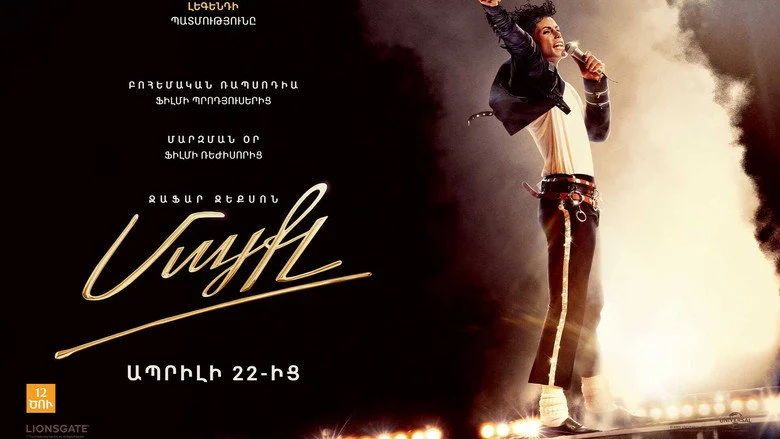
Jaafar Jackson carries the film with convincing physical resemblance and movement vocabulary that frequently verges on photocopy, his body memory of his uncle’s stage presence is the film’s most immediate asset. The role demands he shift from child vulnerability to controlled public performance, and he executes this transition with technical precision rather than emotional excavation. His strength lies in what he recreates; his limitation is that recreation alone cannot substitute for character discovery.
Fuqua Prioritizes Performance Reconstruction Over Psychological Excavation
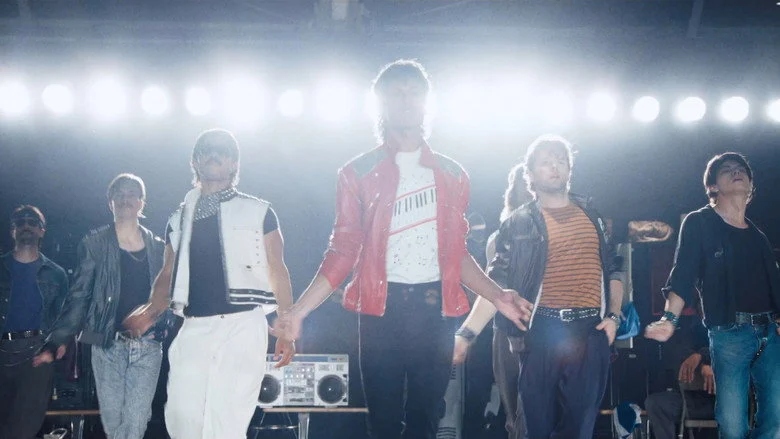
Antoine Fuqua’s direction excels at staging and era-specific visual geography. The recreation of Jackson 5-era origin scenes and early solo performance set-pieces are framed with theatrical scale, particularly in sequences designed for IMAX immersion. The production design distinguishes each historical period with credible detail, costumes, lighting design, and venue reconstruction all signal careful craftsmanship.
Yet Fuqua’s screenplay approach, written by John Logan, remains fundamentally conservative. The narrative sidesteps major controversies by design, compressing decades into a linear trajectory toward early stardom rather than confronting the full weight of Michael Jackson’s life or the contradictions within it. The film’s refusal to widen its scope, ending before his later career, legal challenges, and personal complexity, reads as strategic circumnavigation rather than thematic clarity.
The controlled tone, while technically sound, undermines dramatic tension. When conflict is distributed across family pressure, management demands, and industry machinery rather than concentrated in antagonistic relationships, the stakes flatten into procedural inevitability. A film this measured needs either thematic depth or moral complexity to justify its restraint; Michael offers primarily competent staging.
Explore more perspectives on biographical filmmaking with our English Biography reviews.
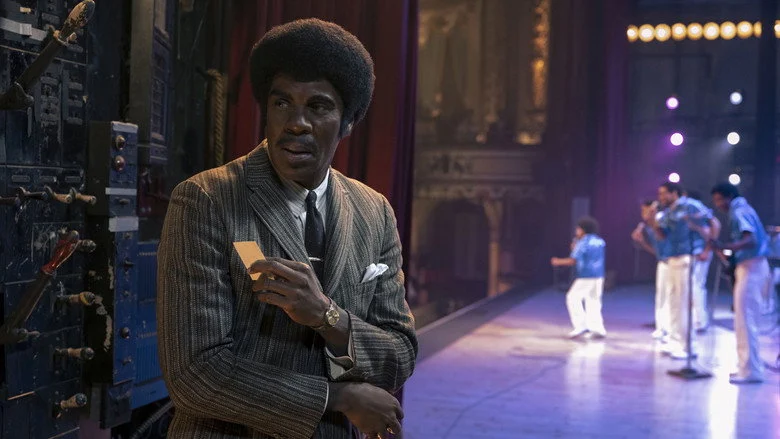
Colman Domingo’s Joe Jackson Embodies Discipline, But the Conflict Never Escalates
Colman Domingo positions Joe Jackson as a force of relentless discipline, the father-manager figure whose pressure shapes every scene involving childhood performance. He brings gravitas to a role that could easily collapse into caricature, and his scenes carry the film’s most genuine tension. However, the screenplay rarely allows their dynamic to deepen beyond established family hierarchy, leaving Domingo’s intensity hovering above the narrative rather than embedded within it.
Nia Long provides stabilizing presence as Katherine Jackson, functioning as emotional counterweight to Joe’s domination, while Miles Teller’s John Branca represents the legal-business infrastructure of Jackson’s career development. Laura Harrier supports the industry context, and Mike Myers appears as a later-career pressure point, each performer slotted into functional positions rather than given space for interpretive surprise.
The Film Sidesteps Biographical Completeness for a Safer Narrative Arc
The most discussed criticism centers on what the film deliberately omits: the full scope of Jackson’s life, his later controversies, and the psychological cost of fame that defined his public narrative. Audiences expecting an unflinching biography have found instead a controlled portrait of early achievement. The film’s scope deliberately ends before biographical complications multiply, a choice that protects the film’s commercial viability but sacrifices dramatic honesty.
Social media sentiment reflects this divide clearly, fans praise Jaafar Jackson’s resemblance and the theatrical presentation, particularly in IMAX framing, while viewers seeking deeper investigation criticize the familiar biopic structure and perceived avoidance of difficult subject matter. The streaming-era expectation for biographical complexity versus the film’s more classical, reverential approach creates a fundamental mismatch for audiences beyond devoted admirers.
If you’re drawn to performance spectacle and don’t require biographical completeness, Michael offers technical competence in service of star mythology. The early Jackson 5 scenes and solo-performance recreations work best on the largest possible screen. For viewers expecting investigation or psychological depth, the film’s controlled restraint will feel like evasion, a polished monument to talent rather than a genuine examination of the person behind the legend.
The film’s approach echoes similar craftsmanship patterns found in Rock 2026 review.
Michael is a technically accomplished but fundamentally evasive biopic that prioritizes staging over substance, earning a cautious 2.5 out of 5 for those seeking actual biographical depth.
For additional perspectives on music-centered narratives with comparable directorial choices, see Dose 2026 verdict.