Peter Parker swings through a New York City that has deliberately erased him from every memory, his web-slinging now a solitary ritual in a metropolis that treats him as a ghost. Tom Holland’s Spider-Man, stripped of identity and support, becomes the film’s quietest, most haunted iteration yet.
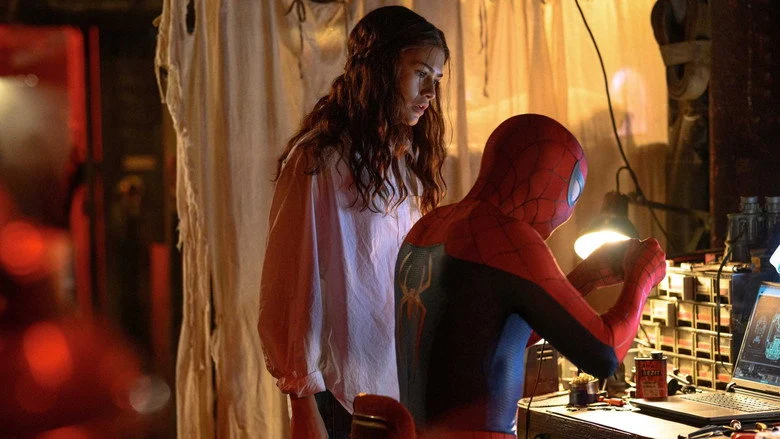
Holland Carries a Bruised and Weary Peter Parker
Even from pre-release fragments, Holland’s performance signals a man running on adrenaline and guilt. The pressure of fighting crime full-time while holding no personal history triggers a physical transformation that threatens his very existence.
His body becomes the battleground for a crisis that No Way Home only hinted at. The trailer’s lone-fighter imagery suggests Holland has traded teen bravado for a clenched-jaw endurance that feels earned.
Cretton’s Direction and an Unseen Villain Problem
Destin Daniel Cretton builds a clear personal premise: isolated Peter, escalating pressure, a hidden threat. The screenplay, by returning writers Chris McKenna and Erik Sommers, risks a setup-heavy first half that may stall before the invisible antagonist emerges.
The marketing’s emphasis on a villain “no one can even see” is conceptually intriguing, but without a concrete face or voice, the central conflict remains dangerously abstract. I’m wary of a thriller where the menace is defined solely by absence.
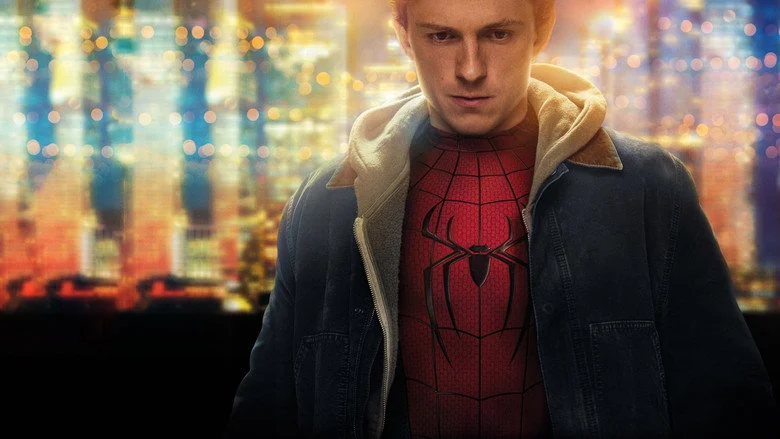
Street-Level Action That Feels Intentionally Scaled Down
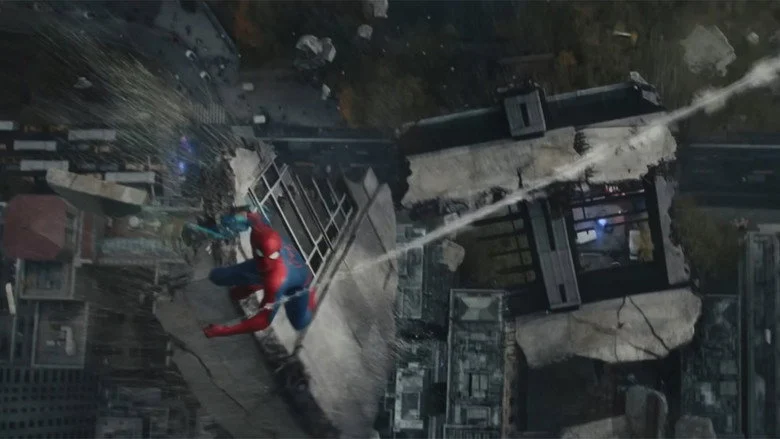
The action design appears to reject the multiverse spectacle of No Way Home, plunging Peter into alleyway brawls and rooftop chases. The tactile cost of every punch and landing is front and center, with the city itself acting as an empty theater.
One trailer scene shows Peter landing on a fire escape, scanning streets that no longer recognize him, a quiet beat that tells you this is a superhero film about loneliness rather than explosions. As Filmyfly also observed in its trailer coverage, the emotional isolation appears to be a defining theme. The physical transformation teased in the second act further hints at a Cronenberg-adjacent body horror strain rarely seen in the MCU.
Cretton uses the ScreenX format to stretch the city’s cold geometry across a wider canvas, emphasizing isolation through negative space. The threat that is “hard to perceive” allows for surveillance-style framing, but it also raises the question of whether the film can sustain tension without a tangible antagonist.
For more takes on the latest in the MCU and beyond, browse our collection of English Action reviews.
Supporting Cast Signals a Grittier Underworld
Jon Bernthal’s Frank Castle enters with a blunt physicality that suggests a darker corner of New York’s criminal ecosystem. Mark Ruffalo’s Bruce Banner anchors the MCU continuity, while Sadie Sink and Tramell Tillman bring unconfirmed roles that hint at fresh dynamics.
Jacob Batalon’s Ned Leeds and Zendaya’s MJ are present but exist at a distance, their absence from Peter’s life is the film’s core wound. The casting of Michael Mando, who played a pre-Scorpion Mac Gargan in Homecoming, signals a connective tissue that careful fans will appreciate.
Audience Reception: High Expectations vs. a Radical Reinvention
After the emotional reset of No Way Home, Brand New Day faces the difficult task of building a new foundation without nostalgia crutches. Early buzz divides fans: some are eager for a leaner, more intimate Spider-Man, while others worry the invisible villain is a gimmick that hides a thin plot.
The secrecy around Sadie Sink’s role and the transformation arc has generated both curiosity and skepticism. This is a film that demands patience for a payoff that may not arrive until the third act.
If you’ve grown tired of MCU overexpansion, this stripped-back premise might feel like a welcome reset, a character study wrapped in spandex. But the reliance on a hidden threat and a physical mutation could leave you waiting for a climax that’s too far off. See it on the biggest screen possible, preferably ScreenX, to feel the cold emptiness of Peter’s New York.
Spider-Man: Brand New Day is a risk that I’d cautiously rate 3.5 out of 5 for its boldness, but the final judgment hinges on whether the unseen villain earns its shadow.
For a different kind of chaotic entertainment, check out our review of India s review, where the talent show’s messiness becomes its own charm.
And if you’re in the mood for a darker narrative shift, read our analysis of Thukra Ke verdict.