
There is a shot early in Varsha Vasudev’s Chinna Chinna Aasai, and I mean a shot, not a scene, because the film thinks in glances rather than events, where Indrans’s Madhavan stands at a kitchen counter, his hands not quite touching anything. He is not cooking. He is not waiting. He is simply standing inside a moment he cannot name, and the camera refuses to leave him there. That refusal is the entire film in miniature: a story that trusts the weight of an unspoken gesture more than the volume of a declaration.
This is a Malayalam romantic drama that runs a little over two hours and change, and it earns nearly every minute of its patience. What it does not do, and this will determine whether you surrender to it or squirm, is escalate. There is no antagonist, no ticking clock, no third-act reversal. There is only the slow, accumulating pressure of people trying to love each other without saying so.
The Engine Is Restraint, Not Incident
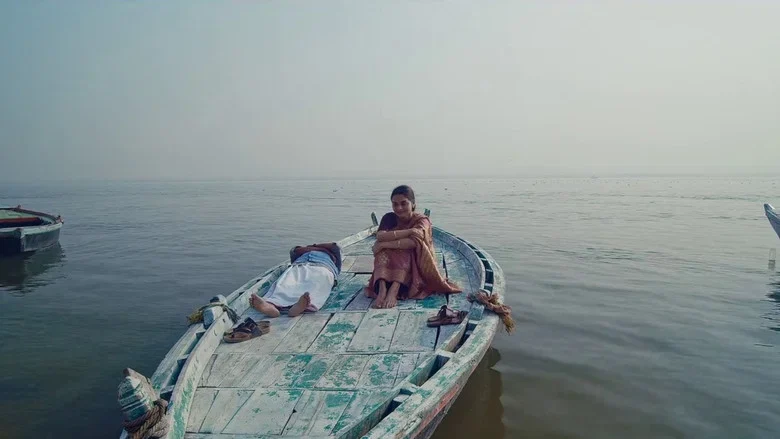
Madhavan’s central struggle is not with another person but with the architecture of his own hesitation. The film places him between Leela (Madhoo) and Jaanaki (Aparna Balamurali), and then refuses to turn that geometry into a triangle. Instead, it becomes something closer to a held breath, a question about what responsibility looks like when desire has already been folded into memory.
Varsha Vasudev’s screenplay is linear and character-led, which is a polite way of saying it has almost no plot machinery. What it has instead is a belief that small decisions carry enormous weight, and the second act is built entirely on that belief. The friction arrives through social texture rather than confrontation, a Tamil Association officer here, a father’s expectations there, and the film treats these pressures as weather rather than villains.
Indrans, Madhoo, And The Grammar Of Stillness
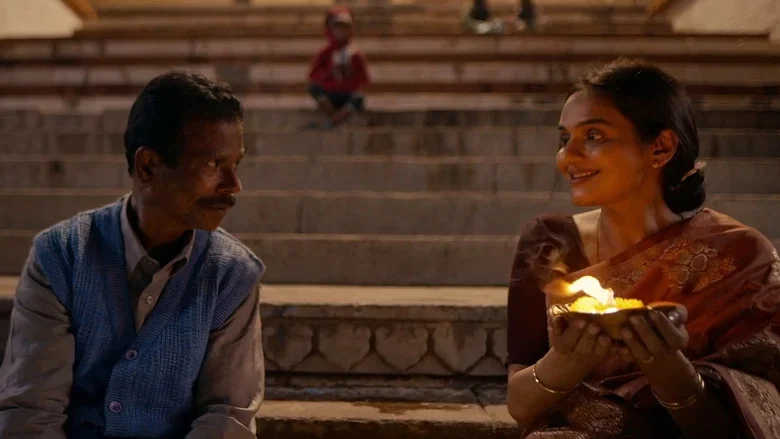
Indrans has spent years in Malayalam cinema building a career on the space between lines, but Chinna Chinna Aasai asks something more demanding of him: to be the film’s gravitational center while doing almost nothing. Watch his jaw in the scene where Leela confronts him about a choice he has already made. He does not react. He absorbs. The performance lives in the delay between hearing and responding, and it is genuinely masterful.
Madhoo matches him with a contained fury of her own, her Leela is a woman who has learned to translate disappointment into politeness, and the film rewards that translation with the kind of close-up that most directors would waste on tears. She gives us none. She gives us a hand adjusting a dupatta instead.
Aparna Balamurali’s Jaanaki functions as the emotional counterweight, and she is asked to do the film’s hardest job: represent a future that the older characters cannot quite reach. She is good in the role, though the script occasionally uses her as a device rather than a person.

Where The Film Refuses To Move
Let me be direct about the pacing problem, because it is real and it is not a bug. The first half is patient to the point of inertia, and there are stretches where the film mistakes duration for depth. A scene of two characters sharing tea can be profound; three consecutive scenes of two characters sharing tea begins to feel like a dare.
Audiences raised on the propulsive emotional engineering of something like Transfer Trimurthulu will find the tempo here almost punishing. But the comparison is instructive: where that film buried its star under narration, this one trusts its performers to carry the weight, and mostly they do.
The film’s other structural gamble is its refusal to give Shetty (Jaffer Sadiq) a proper dramatic function. He looms, he pressures, he exits. There is no reckoning with him, and the film seems to believe that withholding that confrontation is a form of maturity. It is not always. Sometimes it is simply an unfinished thought.
Light, Silence, And The Score That Knows When To Leave
Govind Vasantha’s background score is the film’s quietest collaborator, it does not underline emotion so much as clear space for it, and there are long passages where the only sound is the ambient hum of a room. The editing follows the same discipline, letting scenes breathe past the point of comfort.
The visual language is observational rather than expressive, favoring medium shots that keep characters at a slight remove. This is a deliberate choice, the film wants us to watch people rather than inhabit them, but it also creates a curious emotional distance that the ending has to work hard to close.
And it does close it. The final passage, which I will not spoil beyond saying that it is built on a gesture so small it barely registers as drama, is the finest sequence in the film. It is also the moment where the film’s thesis finally lands: that what remains unsaid is not absence but a different kind of presence.
The Verdict: A Film For The Patient, Not The Hungry
Chinna Chinna Aasai is a film that understands something most romantic dramas forget, that love is often measured in restraint rather than declaration. It is beautifully performed, thematically coherent, and emotionally honest in a way that feels increasingly rare in a theatrical landscape dominated by loud, event-driven storytelling. It is also slow, occasionally self-indulgent, and structurally unwilling to give its audience the catharsis it has earned.
This is a film for viewers who find more drama in a held glance than a shouted confession, the same audience that embraced the haunted, unfinished emotional search at the center of Balan – The Boy. It is not for anyone who needs the plot to move before the heart does. Indrans and Madhoo give performances that deserve a wider audience than the film’s limited trade footprint will likely deliver, and that is the quiet tragedy of a movie about quiet tragedies.
Rating: 3 / 5
See it for the ending. Stay for the silence. Just don’t expect the silence to hurry.






1 thought on “Chinna Chinna Aasai (2026): Indrans Anchors A Radiant Study Of Small Mercies”
Comments are closed.