
Vijay Salgaonkar has spent eleven years teaching audiences that the truth is a thing you bury, not a thing you confess. The franchise’s central joke, that a Class 4 dropout can out-think an entire police apparatus, has always depended on one unspoken contract: the audience knows the crime, and the pleasure lies in watching the cover-up hold. Drishyam: The Conclusion arrives with that contract intact, and that is precisely the problem.
Abhishek Pathak, who steered the 2022 second chapter to a surprisingly robust critical and commercial reception, returns as both director and co-writer. The film is positioned as the final chapter, an original Hindi continuation rather than another retread of the Malayalam source material. That is a genuine creative gambit. It is also the source of the film’s most persistent tension, a story that wants to close a loop while refusing to open a genuinely new one.
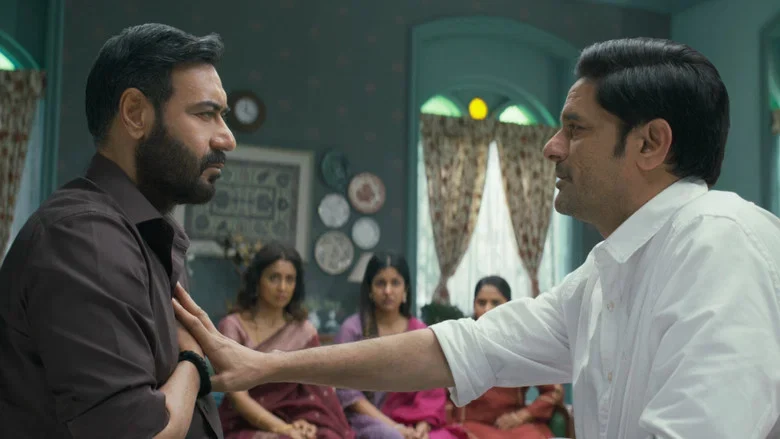
The Salgaonkar Fortress And Its Cracks
The premise is almost aggressively familiar. New evidence surfaces. The past refuses to stay buried. Vijay must once again shield his family from a system that has spent three films trying to dismantle him. The film’s first act reportedly leans hard into this reactivation, with the family unit placed under immediate pressure and the cat-and-mouse dynamic reset.
What makes this structurally interesting is also what makes it structurally safe. The original Drishyam worked because the audience was complicit in a moral crime, we watched a family cover up an accidental killing and we rooted for them. The sequel worked because that complicity curdled into paranoia. A third chapter needs to either escalate the moral cost or dismantle the premise entirely. Early indications suggest it does neither with sufficient conviction.
For a more adventurous approach to genre escalation, our review desk recently examined how TAXILA review built a striking world only to refuse to pay off its own stakes. The comparison is instructive. Both films understand atmosphere. Neither fully commits to consequence.
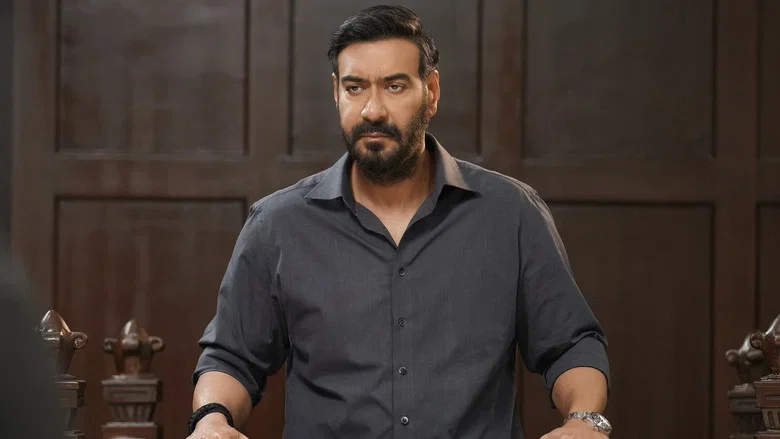
Devgn’s Stillness, Ahlawat’s Menace, And The Weight Of Repetition
Ajay Devgn’s Vijay remains the franchise’s most valuable asset. His performance has always been a study in controlled minimalism, the clenched jaw, the deliberate pause before a lie, the way he makes silence feel like a legal strategy. Devgn, who has spent the last decade alternating between brooding cop roles and broad commercial fare, understands that Vijay’s power lies in his stillness. He does not emote. He calculates.
The problem is that we have seen this calculation before. The trailer-referenced confrontations with Jaideep Ahlawat’s new crime branch officer, Rajveer Singh Tomar, suggest a worthy antagonist. Ahlawat, fresh off the quiet menace of Jaane Jaan and the coiled fury of Paatal Lok, is exactly the kind of actor who can make procedural interrogation feel like psychological warfare. But the material reportedly gives him limited room to manoeuvre beyond standard-issue bureaucratic obstruction.
Tabu’s return as IG Meera Deshmukh is the film’s most emotionally loaded thread. Her character has always been the franchise’s tragic counterweight, a mother destroyed by grief, now a professional adversary. The scenes where she reopens the case carry genuine weight, largely because Tabu can do more with a single glance than most actors manage with a monologue. But the screenplay struggles to give her arc a resolution that feels earned rather than recycled.
For another perspective on how investigative procedurals handle the burden of a returning antagonist, see our analysis of Dark Heaven verdict, which wrestled with similar structural questions about whether a second investigation can ever match the shock of the first.
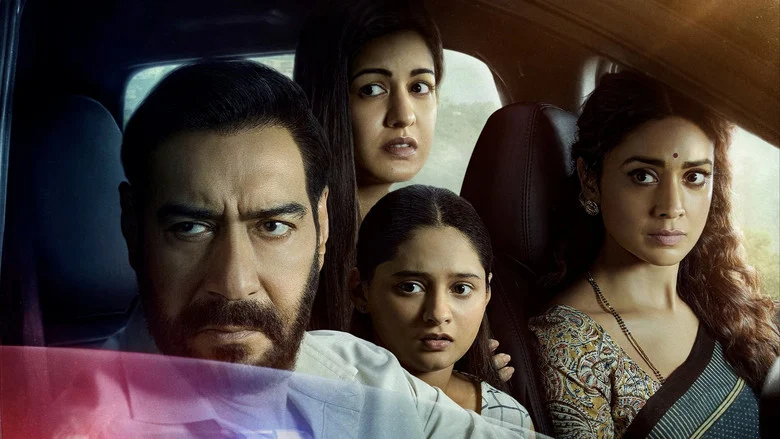
The Craft Question: What Does The Final Chapter Actually Conclude?
Pathak’s direction is competent but cautious. The film’s visual grammar, muted palettes, tight framing, a preference for interiors over exteriors, reflects the franchise’s established aesthetic. There is nothing here that suggests a director pushing against the constraints of the form. The reported 150-to-158-minute runtime (sources vary) raises immediate pacing concerns, particularly for a thriller that relies on tension rather than spectacle.
The “final chapter” framing is the film’s most interesting gamble. It promises closure. It promises consequence. But the available evidence suggests a film that is more interested in revisiting familiar terrain than in truly closing the book. The ensemble, Prakash Raj, Rajat Kapoor, Saurabh Shukla, Shriya Saran, is stacked with talent, but talent alone cannot compensate for a narrative that mistakes familiarity for finality.
This is not a bad film. It is a safe one. And for a franchise that once redefined what Hindi thrillers could do with moral ambiguity, safety feels like a step backward. The Salgaonkar family deserved a conclusion that genuinely tested the limits of their survival instinct. What they get, instead, is a competent sequel that understands the assignment without transcending it.
Verdict: A Competent Curtain Call That Plays It Too Safe
Drishyam: The Conclusion will satisfy franchise loyalists and Devgn devotees. It will not convert sceptics or silence critics who have long argued that the series peaked with its first instalment. The performances are strong, the premise is sturdy, and the execution is professional. But for a film that positions itself as the final word on one of Hindi cinema’s most morally complex families, it feels curiously reluctant to say anything new.
Rating: 3/5
Watch it if: You have followed the franchise from the beginning and want closure, however conventional. Skip it if: You are looking for a thriller that genuinely surprises you. For more of our film desk’s ongoing coverage, visit Hindi Thriller reviews.





1 thought on “Drishyam: The Conclusion (2026): Ajay Devgn Returns In A Sequel That Prefers Familiar Shadows To Fresh Threats”
Comments are closed.