
Every seven years, in the month of June, the men of Mekkarai die. Not in a massacre, not in an accident, on a calendar. S. Balaaji’s The Dark Heaven opens on that arrangement as if it were municipal policy, and for a while the film’s best asset is how calmly it accepts the premise. A 1970s librarian stumbles onto a book that appears to log deaths before they happen. Cut to the present. A newly posted police inspector (Sidhu Sid) walks into a hill village where grief has been scheduled for generations and nobody seems especially surprised.
That is a genuinely good hook, and it is worth saying plainly: the first act of this film is the most confident stretch of Tamil genre filmmaking to arrive this month, a rural mystery that trusts atmosphere over exposition. The trouble starts when it has to become a movie about solving it.
Two Scenes That Show What Balaaji Can Do
Take the librarian sequence. Balaaji stages it with almost no music, letting the scratch of a page turn carry the scene. The camera holds on the book a beat longer than comfortable, long enough that the object stops being a prop and starts being a character. It is a small, disciplined choice, and it tells you the director understands that dread is a function of duration, not volume.
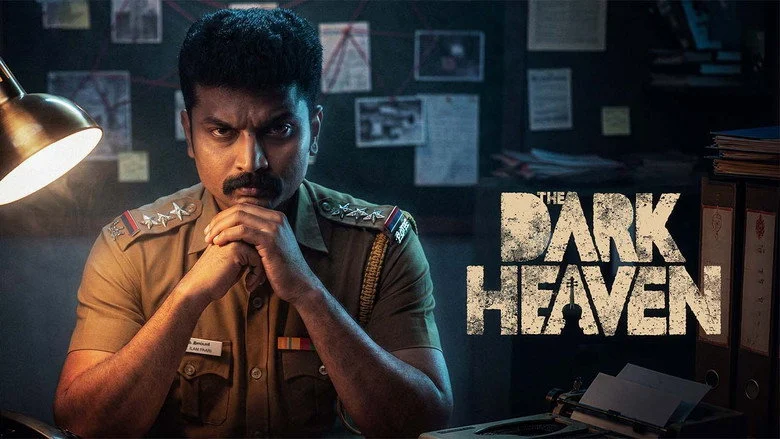
Then watch the inspector’s arrival. Sidhu Sid plays it as a man doing paperwork in a war zone: he asks procedural questions, takes notes, and the villagers answer him with the flat politeness of people who have already decided he will fail. Balaaji blocks the scene so that Sidhu is frequently the only figure in the frame while the villagers cluster at the edges, a visual argument that the outsider is standing in a space that has already closed around him. It’s the film’s cleanest piece of storytelling, and it establishes the procedural spine the second half needs.
Which is precisely why the back half is such a shrug. Once the curse mechanics take over, the film stops investigating and starts explaining. The 147-minute runtime is not the problem in itself; the problem is that the middle hour mistakes accumulation for escalation. New secrets pile on top of old ones without any of them being allowed to breathe, and by the time the climax arrives, and to be fair, it is genuinely hard to call, the reveal lands as information rather than as dread. An unpredictable ending is not the same thing as an earned one.
The Cast Holds A Structure That Won’t Hold Itself
Sidhu Sid is the right kind of lead for this material: watchful, unglamorous, more interested in listening than in punching. His performance keeps the investigation legible even when the screenplay doesn’t. Tharshika Navaratnaraja, as Umaiyaal, is woven into the village’s emotional and historical layers, and she gives the film its only real pulse of personal stakes. Around them, Vela Ramamoorthy and Nizhalgal Ravi do the reliable work of grounding the rural texture, though the script gives them presence without giving them function, which is a waste of two actors who can carry a scene on posture alone.
There is no named antagonist, and that’s a deliberate choice, not an oversight: the film wants the enemy to be fear itself, plus whatever human agency is hiding inside the curse. It’s an ambitious idea that the writing can’t fully service. When your villain is a belief system, you need a sharper final argument than this film builds.
The Folklore Trap
Rural-superstition thrillers live or die on whether the supernatural framing is a mask for something human or a crutch for something lazy. The Dark Heaven keeps its cards close for a long time, admirably so, but the cards, when shown, are familiar ones. The inspector-as-outsider, the cursed village, the prophetic artifact: none of it is new, and the film’s only real differentiator is the seven-year clock, which it under-uses. The book should be the engine. Instead it becomes a plot device that gets consulted rather than feared.
For another look at how a genre premise can be anchored by a single committed performer, our review of Biker review makes an instructive companion piece, same problem, different vehicle. And for a recent example of a film that earns its mythology rather than asserting it, see our take on Hanuman Ansh verdict.
Verdict
The Dark Heaven is a film with a great first act, a serviceable second, and a third that mistakes a twist for a resolution. Balaaji can build a mood, the Mekkarai sequences are genuinely atmospheric, and Manikandan BK’s camera work gives the hill country a damp, watchful quality, but mood is not structure, and 147 minutes is a long time to coast on atmosphere.
Watch it if you like slow-burn rural mysteries and don’t mind a film that prioritises texture over tight plotting. Skip it if you want a clean procedural or a genuinely original spin on the cursed-village template. Regular theatrical viewing is fine; there is nothing here that demands a premium format.
Rating: 3/5, an intriguing premise and a strong lead performance, undone by a screenplay that explains more than it reveals. For more of our festival-and-release coverage, browse Tamil Thriller reviews.





2 thoughts on “The Dark Heaven (2026): Sidhu Sid Investigates A Curse That Runs On A Stopwatch”
Comments are closed.