
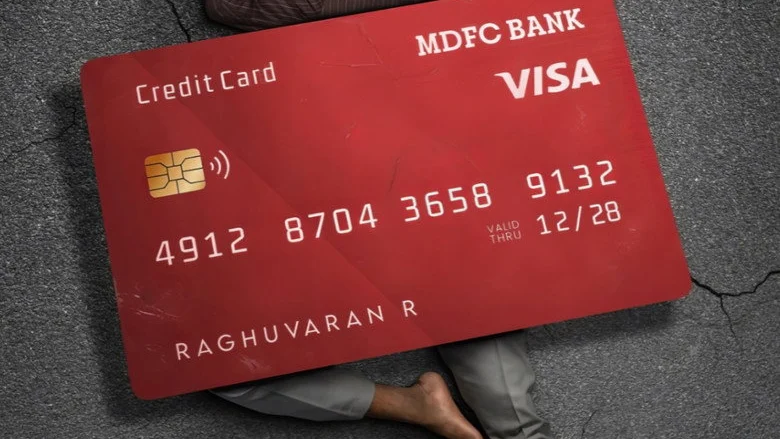
Pavish Narayan opens the film in a state of financial ruin, jobless, debt-ridden, and soon abandoned by his family, all because of his girlfriend Avantika’s unrelenting spending. Narayan doesn’t overplay the despair; instead, he lets the bleak setup breathe through quiet, tired expressions that speak louder than dialogue.
When he finally challenges Avantika to switch roles for four months, the comedic timing in that teaser scene lands with a sharp, practiced rhythm. The actor balances Raghuvaran’s latent frustration with a sly, almost mischievous hope, making the premise feel less like a gimmick and more like a genuine emotional survival tactic.
Magesh Rajendran’s Direction: Brisk Comedy, But Stumbles in the Middle
Director Magesh Rajendran handles the first half with a sure hand, maintaining a clean comedic pace that keeps the role-reversal idea from feeling lazy. The screenplay is linear and largely coherent, using Raghuvaran’s challenge as a strong structural hook.
That said, the middle section reveals rushed plotting, character transitions feel mechanically expedient rather than emotionally organic. Rajendran’s strength lies in the setup, but the execution of the subsequent adaptation phase lacks the fine-grained craft needed to sustain the initial momentum.

Comedy Meets Romance: A Role-Reversal That Works, Barely
The genre engine here is comedy driven by a high-concept role-reversal, and the teaser scene is its most potent gear. When Raghuvaran tells Avantika to “feel the pressure he’s endured, ” the absurdity of the premise is undercut by a sharp, relatable truth about financial stress in relationships. The execution is brisk and never lets the joke outstay its welcome.
The romantic thread, however, feels structurally secondary. Magesh Rajendran keeps the chemistry beats functional but not memorable, the couple’s emotional turning points lack the cinematic spark that elevates a good rom-com into a great one. The climax confrontation, where Avantika must decide whether to rise to the challenge, lands with more narrative logic than genuine feel.
One could argue that the genre works best when it plays with the audience’s comfort zone, and the teaser achieves that. But the third act gives in to predictable beats, softening the very edge the premise had sharpened.

Naga Durga and the Supporting Cast: Ambition vs. Execution
Naga Durga plays Avantika with a convincing sense of entitlement in the opening act, her lavish spending habits painted without judgment. As she struggles to adapt to the “man’s” role, Durga’s performance shifts from careless to genuinely flustered, though the script’s predictability undercuts her arc. The character’s emotional growth is signaled clearly, but never deepened through quieter, unspoken moments.
Adithya Kathir provides functional support in the middle section, though he is given little to do beyond reacting to the central conflict. K.S. Ravikumar, as part of the family dynamics, adds a welcome gravitas to the scenes of abandonment, his brief presence lends weight to a moment that otherwise feels overly dramatic.
For more insightful writing on similar films, browse our Tamil Romance reviews.
Audience Reception: Laughs at the Edges, Fatigue in the Center
Early audience response praises the comedic elements and the relatable portrayal of financial stress, with many singling out the teaser scene as the film’s strongest asset. The leads receive warm acknowledgment for their performances, even if the film itself never quite matches the promise of that opening gambit.
Criticism rightly targets the family abandonment scene, a blunt dramatic move that lacks nuance, and the rushed climax resolution that denies the story a satisfying emotional payoff. The middle section’s pacing variety is also a common complaint, and one I share: the film leans too heavily on its premise without building real dramatic counterpoints or surprises in the second half.
If you’re in the mood for a light romantic comedy with a clever central pitch, Love Oh Love delivers its best moments in the first hour. For deeper emotional engagement or complex plotting, better to wait for the streaming release at home. The film is not a skip, but it is a qualified watch, best experienced with tempered expectations and a fondness for high-concept relationship gags.
Love Oh Love earns a modest 2.5 out of 5, a robust premise executed with uneven craft, saved by its two leads but undone by its rushed finish.
For a more nuanced take on character-driven performance craft, see our Idhayam Murali verdict.