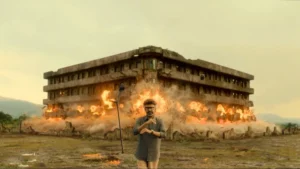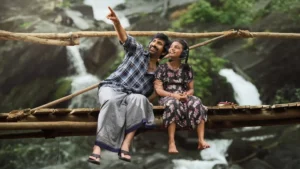
Ninety-five-year-old Ishar Singh Grewal, his mind a sieve of memories, mutters about going back to Sargodha. His grandson Nirvair leans in, trying to piece together a love story that began before Partition and ended in a promise broken by history.
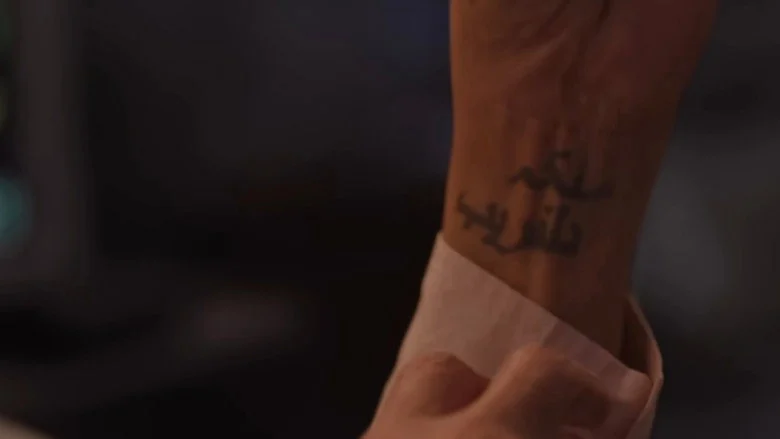
Naseeruddin Shah and the Agony of a Forgetting Heart
Shah doesn’t play dementia as a performance tic. He shrinks into Ishar’s frailty, his eyes vacant one moment and sharp with longing the next. The scene where Nirvair tells him Afsana died waiting, Shah’s face crumples into something primal, a soul finally releasing its grip.
It is the rare kind of acting that makes you forget technique exists.
Diljit Dosanjh: The Bridge Between Two Centuries
Dosanjh grounds the present-day arc with a quiet, exasperated tenderness. His Nirvair is not a hero but a caregiver who Googles his grandfather’s past because he can’t bear to watch him suffer in silence.
When he delivers the line about Afsana spending her life waiting, the weight lands on his shoulders as much as the audience’s. Dosanjh makes frustration feel like love.
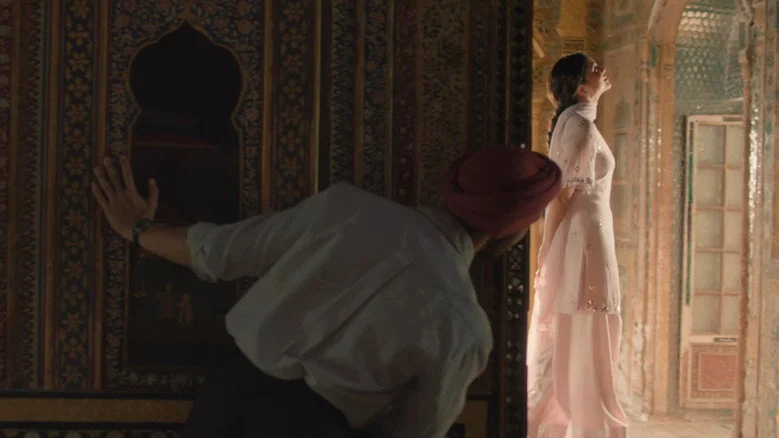
Imtiaz Ali’s Script: Romance That Breathes, Flashbacks That Exhaust
Ali’s strength remains the old-school courtliness of longing, the way a single promise echoes across generations. The non-linear structure lets us feel the tragedy without confusion, and the warm color grade of 1947 versus the muted present is a sharp visual cue.
But the middle act’s extended Partition migration montage drags. It is reverent, yes, but overlong, a history lesson where we already know the lesson.
Vedang Raina and Sharvari: Youthful Fire in a Broken Frame
Raina captures young Ishar’s reckless devotion with an open, hungry face. The promise scene, “Main vaapas aaunga”, lands because he sells it as a boy who hasn’t yet learned that history doesn’t care about promises.
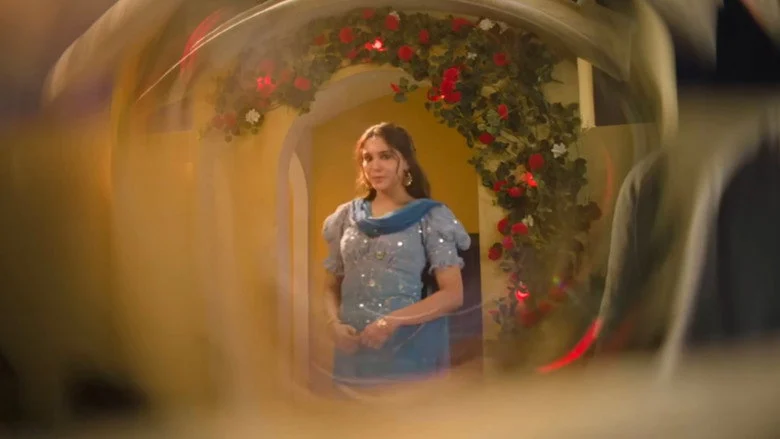
Sharvari plays Afsana with quiet dignity, her sorrow never overwrought. She spends most of her screen time waiting, and somehow makes stillness feel like a scream.
If you love stories that put emotion before spectacle, browse our Hindi Drama reviews for more such journeys.
AR Rahman’s Score: The Real Narrator
Rahman’s music doesn’t just accompany, it bridges. The background score swells during the revelation scene not to manipulate but to underline an ache that has simmered for 78 years.
One montage blends Partition visuals with his composition, and for a moment, the film transcends its own sprawl. It becomes a song about what Partition stole.
AR Rahman’s Score: The Musical Bridge Between Eras
The compositions blend period instruments with modern orchestration, creating a sound that feels both nostalgic and immediate. It is the thread that holds the two timelines together when the editing wobbles.
Without Rahman, the middle act would collapse under its own weight.
The Revelation Scene and the Audacity of a Predictable Ending
Some critics found Afsana’s death predictable. They aren’t wrong, the script telegraphs the blow. But predictability isn’t a flaw when the execution is this precise. The scene earns its tears because Shah and Dosanjh have built to it across 166 minutes.
I found myself hoping the film would surprise us. It didn’t. Yet I still couldn’t look away.
Banita Sandhu and Rajat Kapoor: Thinly Drawn but Effective
Sandhu appears briefly as a family acquaintance who helps Nirvair investigate. Her role is functional, a plot device to move the search forward, but she adds a grounded presence.
Kapoor plays a skeptical relative, offering the only moments of levity. His arched eyebrow when Nirvair starts a wild-goose chase across Pakistan is a welcome breather from the relentless melancholy.
The 166-Minute Problem: Love Needs Room, Films Need Discipline
The runtime is the film’s most contested element. The first half balances past and present elegantly, but the second half slows to a crawl as Nirvair investigates. Scenes repeat the same emotional beats, grief, waiting, a photograph, without advancing the plot.
Critics at Rotten Tomatoes (92%) praised the ambition but flagged the pacing. The audience sentiment echoes this: love the ending, wish the journey were tighter.
Go for the climax, but be patient with the middle. This is a film best watched in a single sitting, not because it demands attention but because stepping away breaks the mood it works so hard to build. Watch it on a big screen where the color contrast and Rahman’s score can envelop you. Main Vaapas Aaunga earns a heartfelt 3.5 out of 5, a flawed, beautiful promise kept by its performers.
For a similar emotional register in a tighter package, check out Dark Giant review.
Another generational love story with a musical spine, Deewana verdict, plays it safer but hits familiar notes.