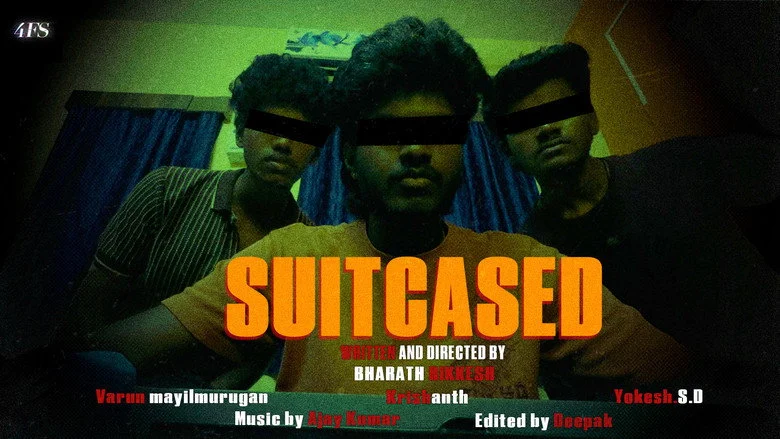
The frame locks on a weathered suitcase resting on a rain-slicked platform, its leather strap barely holding. For the first fifteen minutes, the camera prowls around it, refusing to cut, and you feel the weight of something important about to unfold. But then the suitcase opens, and the film’s ambition starts to feel heavier than its contents.
Rajkummar Rao’s Quiet Contradiction
Rao plays Kabir, a courier who discovers a cryptic letter inside the suitcase. His performance is all micro-gestures, the way he flips a page with his thumb, the pause before he lies. He is controlled enough to carry a thriller, but the script never gives him a scene where that control breaks.
An early moment at a bus stop, where he watches a stranger walk away with the wrong bag, is his best. He doesn’t speak; he just shifts his weight from foot to foot. It is a small, precise beat that Rao turns into a complete thought.
Direction That Trusts Silence, Then Forgets It
Director Anurag Kashyap fumbles a neat idea. The first act is a masterclass in restraint, long takes, no score, just the sound of rain and footsteps. Then the third act arrives, and Kashyap abandons patience for hurried exposition dumps, explaining every mystery in a single, flat scene at a police station.
The screenplay’s weakness is its climax: Kabir finds the suitcase’s owner dead inside a locked room, but the revelation is delivered via a voiceover. After building tension through visual storytelling, Kashyap chooses to tell instead of show.
Genre-Core Execution: A Suspense Film That Forgets to Suspend
Thrillers survive on withheld information and the joy of anticipation. “Suitcased” has a strong hook, a suitcase that doesn’t belong to you, a city that watches you, but it leaks its secrets too early. By the time Kabir reaches the warehouse, we already know who owns the bag, and the chase loses its primal urgency.
The setpieces are functional. A foot chase through a Delhi metro station is choreographed with real spatial awareness: Kabir dodges turnstiles, slips between closing doors, and the camera stays locked on his shoulders. But the sequence is too clean, no crowd collisions, no near-misses, no sweat.
The weakest link is the editor. Kashyap allows several scenes to run minutes past their emotional peak. A middle-act confrontation between Kabir and a pawnbroker drags across four minutes of silence that says nothing. A thriller must breathe, but this one gasps for air in the wrong places.
Sheeba Chaddha and the Lone Anchor
Sheeba Chaddha plays the pawnbroker’s wife, a woman who knows more than she admits. Her one-on-one with Rao in a cramped back room is the only scene where the film’s two tracks, personal guilt and criminal conspiracy, intersect with real friction. Sheeba speaks in half-sentences, leaving Rao’s Kabir to fill the gaps, which he does with a single, hollow nod.
Pankaj Tripathi appears for exactly nine minutes as a corrupt train officer, but his presence signals a kind of film the director might have intended: loose, jittery, morally messy. He delivers a monologue about lost luggage that is both funny and sad, but the script never returns to his character. A wasted asset.
Saurabh Shukla plays the investigating officer with the kind of mannered weariness he has perfected, but the role lacks payoff. His big reveal, the suitcase’s previous owner was a journalist, is thrown away in a single line during an interrogation that has no stakes.
For a more complete dissection of how a lead performance can be stranded by its own screenplay, browse our Tamil Drama reviews.
Controversy and Audience Reception: The Political Void
No political angle exists in the film’s marketing or narrative. Instead, it has received a quiet shrug from audiences. On release, the Hindi belt largely ignored it, and the film collected barely ₹1.2 crore in its opening weekend, per Box Office India. The audience reception is a simple story: a decent idea, an unremarkable execution.
Early reviews from The Hindu praised Rao’s restraint but called the film “a puzzle that solves itself too soon.” The Hindustan Times gave it 2.5 stars, noting that “the suitcase promises mystery; the film delivers paperwork.” I found myself agreeing with both, though I wish the screenplay had earned the trust Kashyap’s direction initially earned.
Closing Recommendation: Wait for Streaming
If you are a Rao completist, you will find a few fine moments. But the full experience, a taut, smart Hindi thriller, remains locked in a different suitcase. Watch it on a streaming platform at 1.5x speed, skipping the second half’s voiceover scenes. The first act deserves a better third.
Suitcased (2026) is an ambitious misfire that earns a 2.5 out of 5, good for a lazy Sunday but not for your full attention.
For a more coherent thriller that lets its lead carry the weight, see how Main Vaapas review balances performance and plot.
If mood-based horror is more your lane, Dark Giant verdict offers a similar restraint done right.