
The wedding invitation is printed before anyone asks the bride what she wants. That is the whole architecture of Badrappa Gajula’s rural family drama, and for a while, it works.
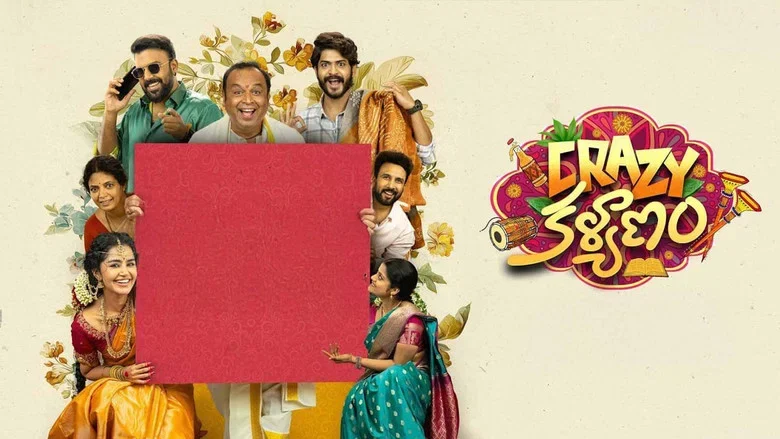
Anupama Parameswaran plays Keerthi, a young woman in rural Telangana who wants a degree and a salary before a husband. Her father wants a prestigious alliance. The film’s sympathies are clear from the first frame, but its dramatic instincts are not.
A Reputation Economy Built On Borrowed Proposals
Parvathalu, played by V. K. Naresh, is not a villain. He is a man who measures his worth in what the village says about his household, and that is a more interesting antagonist than any schemer.
The film’s best structural idea arrives when he diverts a marriage proposal intended for his elder brother’s daughter and redirects it into his own home. It is petty, plausible, and deeply revealing.
That single act of domestic larceny converts a loose collection of family vignettes into a genuine conflict. Unfortunately, it takes the screenplay nearly half an hour to arrive there.
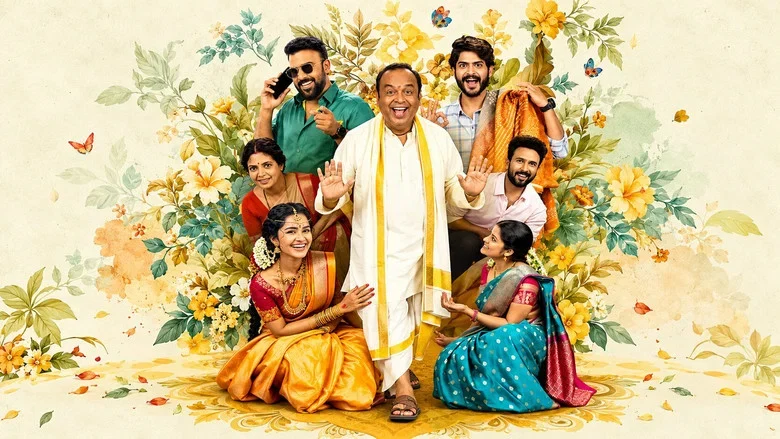
The opening stretch lingers on introductions, household routines, and the drinking habits of Balraju, the elder son-in-law. Tharun Bhascker plays him with a loose-limbed, slurry-voiced energy that lands jokes but stalls momentum.
When Comedy Becomes A Delay Tactic
Balraju’s drunken returns generate the film’s loudest laughs and its clearest social observation. His visible disorder sits in direct contradiction to Parvathalu’s obsession with outward respect, and the arguments between them carry real texture.
Yet the comedy keeps deferring the film’s actual subject. Every scene of Balraju stumbling through a doorway is a scene Keerthi is not being asked what she wants.
The romance between Keerthi and Uday suffers the same fate. Akhil Raj Uddemari is pleasant and entirely unremarkable, and the film gives the pair no scene that justifies their attachment beyond proximity.
It is telling that the more interesting father-daughter material arrives only after the wedding machinery is fully engaged. The film is more comfortable with parental anxiety than with young love, and that imbalance shapes everything that follows.
The Long Scene Where Naresh Refuses To Blink
There is a lengthy confrontation involving Naresh that the film treats as its emotional centrepiece, and he earns the attention. Watch his jaw tighten before he speaks, the way his voice drops rather than rises when he is contradicted.
He plays authority as a physical habit. His Parvathalu does not shout down objections so much as absorb them into a posture of wounded dignity, and the effect is quietly suffocating.
Parameswaran meets him with a different register entirely. Where he hardens, she goes still, holding her chin level and letting her eyes do the arguing, and the contrast gives their scenes a friction the rest of the film lacks.
Her work here recalls the emotional patience she brought to Srinivasa Mangapuram, where restraint carried scenes that the writing did not. She is doing the same salvage job again, and doing it well.
The supporting ensemble of village relatives and temple elders functions mostly as a chorus of social expectation. They register as pressure rather than people, which serves the theme but leaves the frame feeling thin.
A Message Delivered By Announcement
The film’s final turn asks Parvathalu to accept that his daughter’s education matters more than a lavish alliance. It is the right conclusion, and the screenplay arrives at it by declaration rather than accumulation.
Nothing in the preceding two hours prepares us for a man this rigid to bend this quickly. The change feels granted by the script rather than earned by the character, and it deflates the resolution.
Gajula’s direction is strongest in the village texture, where courtyards, thresholds, and crowded verandas carry the weight of being watched. Shyam Dupati’s camera understands that this is a story about visibility.
What the film lacks is tonal control. The shift from slapstick household chaos to earnest social argument is abrupt, and the editing never finds a rhythm that bridges the two halves.
The thematic sibling here is Irumudi, which trusted silence to carry its paternal reckoning. Crazy Kalyanam trusts speeches instead, and speeches are cheaper.
The comparison with Garividi Lakshmi is instructive for a different reason: both films have a clear thesis about rural women’s autonomy and neither fully locates the dramatic engine to prove it.
A Small Budget In A Crowded Corridor
Produced by Boosam Jagan Mohan Reddy on a reported budget in the low single-digit crores, the film is a modest proposition in every sense. Its ambitions are thematic rather than visual, and its economics reflect that.
Releasing against larger titles in the same corridor was always going to cap its reach. The film’s theatrical ceiling is set by its scale, not its quality. Yet, as digital streaming analysts and regional platforms like HDHub consistently observe, mid-budget social satires often find their most appreciative and enduring audience once they transition from narrow theatrical windows into broader home viewing networks.
What it does offer is a template for the kind of mid-range family drama that contemporary Telugu dramas keep attempting and rarely refine. The audience exists. The execution is what needs work.
The Bride Who Was Never Consulted
Crazy Kalyanam ends with a father conceding that his daughter’s future is worth more than his standing, and the concession is correct and hollow in equal measure. We are told he has learned something. We are not shown the learning.
Parameswaran and Naresh give the film a spine it has not earned, and their scenes together are the reason to sit through the slower stretches. The film around them is a decent argument wearing a mediocre screenplay.
Somewhere in this village there is a better movie about a girl who simply refuses to be the transaction. This one keeps inviting us to admire her from across the courtyard.







1 thought on “Crazy Kalyanam (2026): Anupama Parameswaran Anchors A Wedding Drama That Forgets The Bride”
Comments are closed.