
Prince Joy’s Titans opens in the salt-bleached alleys of Fort Kochi, where Jayasurya’s Antony Yakuza dreams of a heist that will finally make the underworld take him seriously. What follows is a film that keeps changing its own rules mid-handshake.
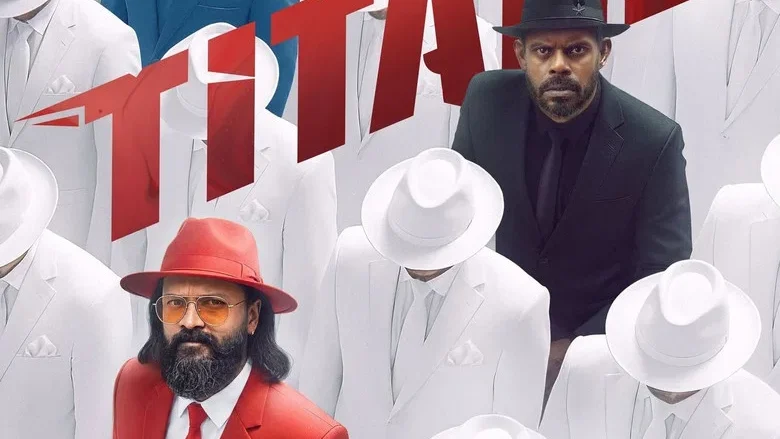
When a Getaway Driver Becomes the Film’s True Engine
The premise is deceptively clean: a low-ranking gang member, his tech-savvy roommate Anwar (Nihal Nizam), and a last-score plan meant to buy respect. Then Vinayakan’s Rejimon slides into the driver’s seat, and the movie quietly detonates its own genre contract.
Vinayakan plays Rejimon as a man whose stillness is the threat. He doesn’t announce his hidden agenda; he lets it sit behind his eyes while the other two chatter through logistics. It’s the kind of performance that turns a routine recruitment scene into the film’s most electric passage.
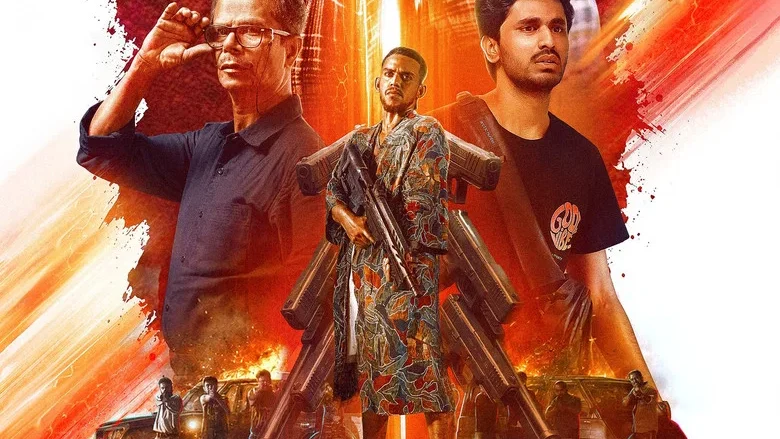
The Tonal Tightrope Nobody Fully Walks
Joy wants crime, comedy, mystery, and fantasy to share the same frame, and for long stretches the ambition is genuinely exciting. The problem is that the film treats escalation as a substitute for architecture.
Once the inexplicable events begin, the screenplay stops earning its surprises and starts spending them. A chain of strange incidents replaces cause and effect, and the comedy starts undercutting tension that the thriller half has worked hard to build.
Where a peer release like 418 weaponized ambiguity by refusing to explain itself, Titans explains too much in some corners and too little in others. The mystery becomes a mood rather than a mechanism.
Jayasurya’s Best Moments Are the Quiet Ones
Antony is a man performing confidence he hasn’t earned, and Jayasurya plays that gap with real precision. Watch his shoulders in the planning scenes: they’re set like a man who has rehearsed being dangerous in front of a mirror.
The performance finds its sharpest register when Antony realizes Rejimon isn’t following the script. Jayasurya doesn’t go big; he goes small, letting a flicker of panic cross his face before the bravado snaps back into place.
That restraint is a marked departure from the broader comic register he brought to Crazy Kalyanam, and it suggests a performer increasingly interested in what happens in the pauses.
Supporting Players Adrift in a Crowded Frame
The supporting cast is large enough to strain the film’s focus. Suresh Krishna’s CI Vyasan registers as a credible procedural presence, but the screenplay never gives him a confrontation worth the setup.
Indrans and Sunny Wayne appear in roles that feel like promises the movie forgets to keep. Their screen time is spent establishing texture rather than dramatic function, and the ensemble starts to feel like a guest list rather than a story.
The royal-relatives energy of the extended cast is unmistakable: lots of faces, lots of attitude, very little narrative consequence. When a film this crowded can’t find a use for performers this good, that’s a structural warning sign.
Fort Kochi as a Character, Not a Backdrop
The location work is the film’s most consistent pleasure. The color palette leans into sun-bleached Western pastels, and the costume design gives the underworld a theatrical, almost storybook quality that suits the fantasy register.
Joy stages the early crime scenes with a patient camera, letting the geography of the alleys do the work of establishing stakes. It’s only when the fantasy element arrives that the visual language starts to feel uncertain about what movie it’s in.
The score follows the same pattern: effective in the crime passages, overeager in the comic ones. The film keeps telling us how to feel instead of trusting the frame to do it.
A Genre Blend That Echoes the Best of Contemporary Malayalam Thrillers
The film’s ambition places it squarely within a broader wave of contemporary Malayalam thrillers willing to mash registers that used to stay separate. That ambition is worth celebrating even when the execution wobbles.
What Titans lacks is the discipline that made a film like Aasha so potent: the willingness to sit inside a single emotional register long enough for it to land. Here, the film keeps moving before anything has time to settle.
The Studio Bet and the Box-Office Arithmetic
With Mithun Manuel Thomas and Irshad M. producing, Titans represents a meaningful swing for its backers: a mid-budget genre hybrid built around star power rather than spectacle. The theatrical bet is on Jayasurya’s drawing power and Vinayakan’s cult credibility.
The commercial question is whether Malayalam audiences will follow a film that refuses to stay in one lane. As tracked across digital cinema release portals like MP4Moviez, the crime-fantasy hybrid has a devoted niche, but the UA16+ classification narrows the family audience that usually cushions a star vehicle’s opening weekend.
Jayasurya’s box-office leverage remains real, but this is the kind of project that lives or dies on word of mouth rather than opening-day frenzy. The franchise potential is there; the execution isn’t yet consistent enough to guarantee it.
The Uncomfortable Verdict
Titans is a film at war with its own best instincts. The crime story works, the performances work, and the Fort Kochi atmosphere works; the fantasy machinery is what keeps tripping over its own feet.
Joy has made something genuinely strange, and strangeness is worth something in a market that rewards familiarity. But strange isn’t the same as coherent, and the film’s final act mistakes confusion for mystery.
What lingers is Jayasurya’s face in the moment Antony realizes the plan has slipped beyond his control. It’s a small, precise image of a man discovering that respect was never his to take, and it’s the one moment where Titans earns the scale of its own title.






1 thought on “Titans (2026): Jayasurya Anchors a Wildly Uneven Crime-Fantasy Gamble”
Comments are closed.