At a fortune bell in Japan, a shy IT employee closes his eyes and wishes for one impossible day with the woman he loves, a premise as clean and fragile as glass. What unfolds is a romance held together by a single narrative device: memory loss erases the emotional stakes the moment the credits near, leaving the film caught between wish fulfillment and hollow aftermath.
Sunil Pandey’s direction builds the conceit methodically, but the structure collapses under its own limitations. Ek Din opens with Rs 1.15 crore on its opening day in India, according to Times of India data, a signal the premise failed to translate audience curiosity into sustained interest. The film knows its concept but struggles to justify why we should care once the mechanism runs its course.

Junaid Khan’s restraint carries the emotional weight until the mechanism fails
Junaid Khan plays Dinesh “Dino” Shrivastava as an office shadow, overlooked, hesitant, articulate only in silence. His performance rests on the contrast between internal longing and external inadequacy, a register that demands subtlety rather than heroic outburst. The wish sequence at the Fortune Bell is his moment; he delivers it with the quiet intensity of someone afraid to hope.
Yet the structure asks him to carry emotional resonance across a day that won’t be remembered. Once Meera forgets, Dino’s performance has nowhere to go but backward, reducing the second half to a study in futility. Khan’s restraint becomes a liability when the narrative itself refuses to let him break free.
Pandey’s clean setup cannot survive its own one-day constraint
The direction establishes the office environment and wish-driven inciting incident with clarity. Japan provides a visual break from cubicles and meetings, a geographical reset that the screenplay needed. But the film’s emotional progression is fundamentally constrained by the limited-day device, which feels less like a narrative choice and more like a creative wall.
Sneha Desai and Spandan Mishra’s screenplay follows a linear arc: setup, wish, temporary fulfillment, memory erasure, aftermath. The problem is the third act, which resolves not with dramatic climax but with narrative surrender, the central question of the love story left unanswered because Meera retains no memory of why it should be answered. This is not ambiguity; this is deflation.
The romance genre hinges on stakes that dissolve by design
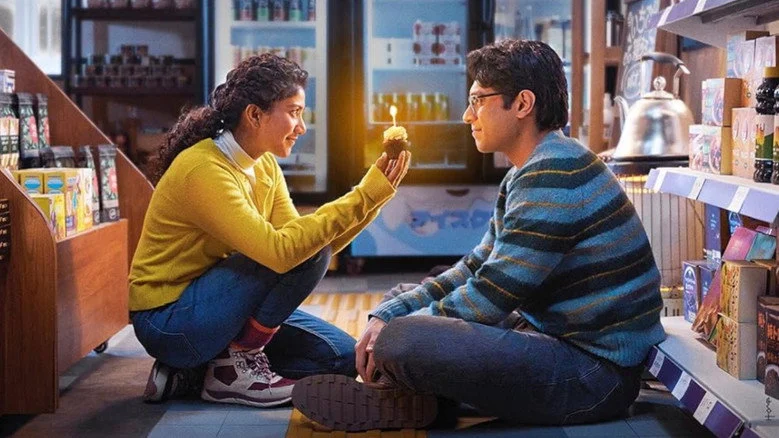
The film attempts to build unspoken attraction into reciprocated love across a single day in Japan. Sai Pallavi’s Meera falls for Dino during the wish-granted sequence, the genre’s core machinery turns on this reversal. The isolation of Japan works in the romance’s favor; it removes office hierarchy and gives the leads room to discover each other without workplace witnesses.
But the memory-loss element betrays the romantic premise. Once Meera forgets, the story shifts from fulfillment to melancholy, a tonal pivot that many viewers found limiting. The emotional payoff, whether temporary love should become lasting, is undercut by narrative design that erases the evidence of that love from one partner’s consciousness.
Comedy threads through the setup: awkwardness, social fumbling, the contrast between Dino’s internal world and external reality. These moments work when the tone remains light, but they struggle to coexist with the film’s larger melancholic arc. The mixing of romance, drama, and comedy never achieves synthesis; instead, each tone undermines the others.
For Hindi film reviews that explore romance with structural ambition, Hindi Romance reviews across this site offer deeper analysis of how premise and execution either align or diverge.
Sai Pallavi and Kunal Kapoor execute their roles within narrow boundaries
Sai Pallavi carries the one-day emotional arc as Meera Ranganathan, moving from indifference to affection within the wish’s timeframe. Her performance is credible within these constraints, but the character’s subsequent amnesia reduces her to a device rather than a fully realized partner. The aftermath asks her to deliver scenes without the emotional knowledge that would justify them.
Kunal Kapoor’s Nakul Bhasin functions as romantic rival and office boss, a dual role that gives context to Meera’s pre-existing entanglement and Dino’s sense of inadequacy. Kapoor establishes the power dynamic efficiently, though the character never transcends the function of creating conflict.
Aamir Khan Productions’ backing cannot compensate for weak market reception
The production team assembled credible elements: Mansoor Khan and Aamir Khan as producers, Ram Sampath for music, a premise adapted from existing material. Yet commercial failure indicates the audience saw through the structural limitation. The opening weekend and subsequent box office trajectory suggest viewers were not persuaded that one day of temporary love justified two hours of their time.
The film was reported as commercially unsuccessful, and critical commentary has focused on the “very ordinary” opening and the emotional resolution’s inability to transcend its forgetfulness conceit. This is not a question of execution failing to serve ambition; it is ambition itself being insufficient.
Skip this one. The premise is clever enough to warrant curiosity, but the execution collapses once the wish’s 24-hour timer expires. The Japan backdrop and Junaid Khan’s quiet performance keep it from being unwatchable, but neither can overcome a structural flaw that feels intentional rather than accidental, the film seems designed to disappoint once the emotional machine runs down. Watch it on streaming if you’re drawn to office romances, but expect the emotional payoff to evaporate alongside Meera’s memory.
The companion piece Krishnavataram Part review faces similar struggles with premise versus execution.
Ek Din (2026) is a forgettable romantic drama that mistakes structural gimmickry for emotional depth, earning a 2.5 out of 5 for concept that collapses under its own one-day constraint.
Both films explore how Star Wars verdict demonstrates, a strong central performance cannot fully salvage narrative choices that undermine the premise.