
The film opens on a held frame, a corridor stretched to a vanishing point, and the sound of breathing that belongs to no visible body. It is a confident opening image for a project that has roughly nine minutes left to justify it. That is the central tension of Find Me, a ten-minute horror-drama that behaves like the cold open to a feature that never arrives. The atmosphere lands instantly. The patience does not.
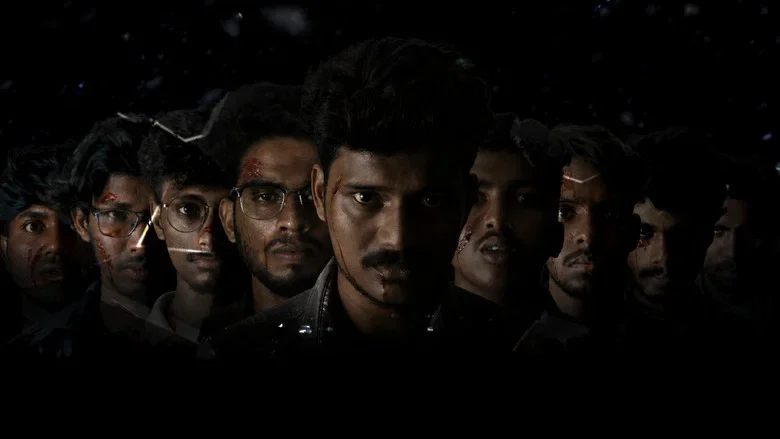
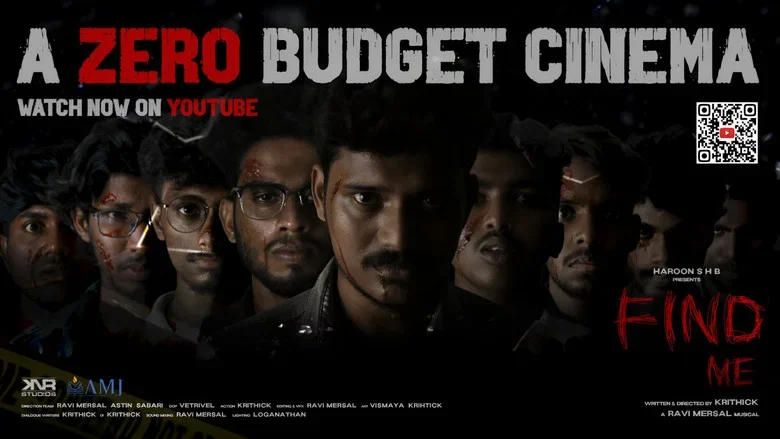
Catalogued as an English-language genre entry, the film assembles a large ensemble of credited performers around a premise it declines to reveal in conventional terms. What is visible on screen is a study in compression: rooms that feel staged for a single purpose, faces that hold the frame a beat longer than comfort allows, and a sound design that leans hard on the low-frequency hum of dread rather than the crash of release. It is a filmmaker reaching for mood over mechanics, and for a brief stretch, the gamble nearly works.
The Anxiety of the Unfinished Frame
There is real craft in how the film rations information. The camera stays close, often at shoulder height, so the viewer is placed beside the characters rather than above them. Dialogue is sparse, almost functional, and the horror emerges less from what is said than from the way a body stiffens when a door remains shut too long. This is the language of contemporary short-form horror, where restraint is the entire budget.
Where the film stumbles is in its refusal to commit to a payoff. The genre contracts with the audience: build tension, then break it. Find Me builds, builds, and then simply stops, as though the final beat were cut in the edit and never restored. Compare the discipline of physical commitment seen in Angikaaram, where the body itself carries the narrative weight, and the gap is instructive. Here, the performers are asked to carry atmosphere, not story, and the distinction shows.
Performances Built for a Longer Film
Krithick Krishnan moves through the frame with a stillness that suggests he understands the assignment better than the script does. His eyes track off-screen space, his hands stay loose, and he never overplays the dread. It is a disciplined piece of screen presence, the kind that would flourish across ninety minutes and feels wasted in ten. Shakthi, in the moments where she is given the frame alone, registers a similar control, particularly in a wordless beat where she simply waits.
The supporting ensemble, credited in numbers that suggest a much larger production, mostly functions as texture. They populate rooms, cross thresholds, and disappear without individual dramatic function. That is not a failure of performance so much as a failure of allocation. When a film has this many names and this little running time, the result is a chorus with no soloists, and the audience is left watching faces rather than characters.
Sound, Silence, and the Limits of Suggestion
The most accomplished element here is the audio architecture. Silence is used aggressively, dropped into scenes like a held breath, and the score, when it appears, is minimal to the point of absence. The result is a film that sounds more frightening than it looks. Visually, the lighting favors practical sources and shadowed corners, which suits the material, though the compositions rarely surprise. The frame is competent, not inventive.
What the film lacks is escalation. Horror of this kind lives on the promise that the quiet will eventually break, and Find Me never quite delivers the break. The pacing stays level, the reveals stay withheld, and the ending arrives as an interruption rather than a conclusion. The broader landscape of recent theatrical releases has shown that short-form genre work can land with real force when it commits to a single, sharp idea. This one has the idea. It lacks the knife.
A Fragment That Wants to Be a Feature
It is worth noting what the film is not. It is not a cynical exercise, and it is not incompetent. The blocking is deliberate, the performances are controlled, and the mood is sustained with more discipline than many full-length horror films manage in their opening acts. The problem is structural: ten minutes is enough for a punchline, not a thesis, and Find Me is trying to deliver a thesis.
The comparison to sprawling, overstuffed dramas like Ananthan Kaadu, which buckles under the weight of its own ambition, is oddly flattering here. That film has too much. This one has too little. Both fail for the same reason: a mismatch between the size of the idea and the size of the container. Finding the right container is the whole job, and this one is a size too small.
The Verdict
Find Me is a mood piece for viewers who value atmosphere over resolution, who are willing to sit inside unease without demanding that it resolve into meaning. Those who seek feature-length narrative scale, character arcs with beginning and end, or the satisfaction of a genre promise kept should look elsewhere. It is a calling card, not a complete statement, and it plays like the first reel of something that was never finished.
The film’s final image lingers longer than its story does, which is both its achievement and its indictment. There is a filmmaker here worth watching, and a project here worth forgetting. Rating: 2.5 / 5





1 thought on “Find Me (2026): A Ten-Minute Horror Fragment That Flickers Without Igniting”
Comments are closed.