
Siddharth P. Malhotra opens Ikka with the kind of image that promises a genuinely thorny legal drama: Arjun Mehra, a respected attorney, forced into a confrontation with Shauryaman Gaur, a man he himself helped put away. The premise carries real moral weight, defending a former enemy while your own family and reputation sit exposed on the witness stand.
What follows, unfortunately, is a film that keeps reaching for that weight without ever quite lifting it. The opening mystery lands with genuine intrigue, but the screenplay by Althea Kaushal and Mayank Tewari treats that intrigue as a launching pad for melodrama rather than an invitation to dig deeper into the case’s moral architecture.
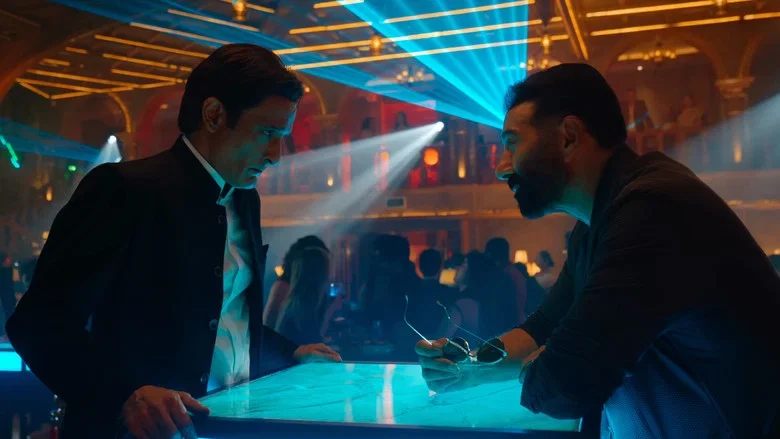
When Twists Replace Investigation, The Thriller Loses Its Spine
The middle stretch is where Ikka reveals its real operating principle: keep the audience off-balance through engineered reversals rather than earned discovery. Every time the narrative threatens to settle into a genuine investigative groove, another convenient revelation arrives to redirect attention. It’s a structural choice that prioritizes surprise over substance, and it wears thin fast.
The film’s tonal identity crisis compounds the problem. It wants to be a hard-edged legal thriller, a family melodrama, and a star vehicle all at once, and it never commits to any of them long enough to succeed at one. Recent Hindi courtroom dramas like I, Nobody at least understood that a single sharp premise, executed with discipline, beats five half-committed ones.
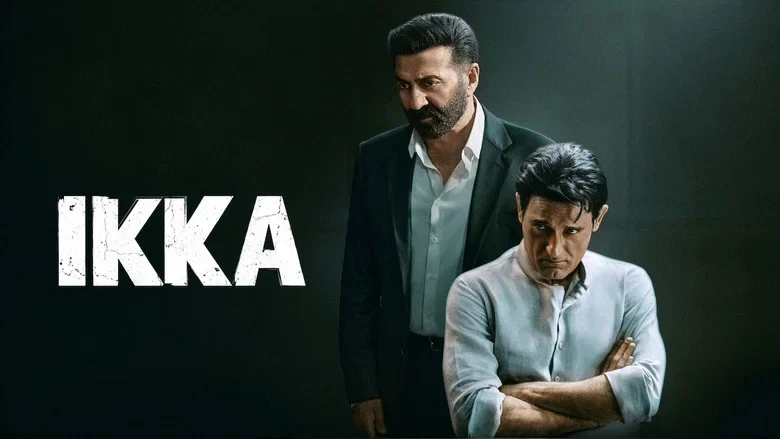
Two Actors Holding Up A Script That Keeps Sliding
Sunny Deol anchors the proceedings with the same imposing stillness he’s brought to roles for three decades, shoulders squared, voice dropped to a register that makes even routine objections feel like verdicts. But the script gives him force without variation, and by the second hour his courtroom intensity starts to feel like the only gear he’s been handed.
Akshaye Khanna is the film’s genuine asset. As Shauryaman Gaur, he works in micro-adjustments: a slight tilt of the head during testimony, a pause held just long enough to unsettle the room, a smile that never quite reaches his eyes. He understands that menace lives in restraint, and every scene he shares with Deol gains a charge the writing alone doesn’t provide.
The supporting frame, Dia Mirza’s domestic presence, Tillotama Shome’s prosecutorial opposition, exists mostly to widen the emotional stakes beyond the courtroom. Both performers do what they can, but their characters function as narrative furniture rather than dramatic participants, and the film never gives them a scene that genuinely shifts the case’s trajectory.
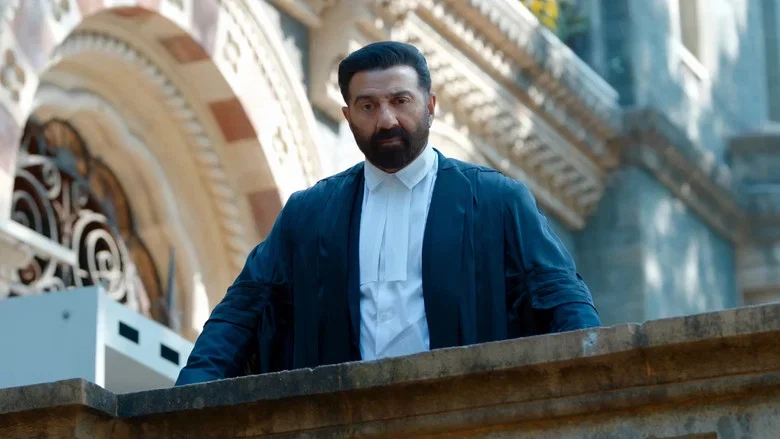
The Final Act Finally Breathes, But Too Late To Save The Whole
Something shifts in the last stretch. The pacing tightens, the confrontations carry actual consequence, and for roughly twenty minutes Ikka becomes the film it should have been from the start, urgent, morally charged, and willing to let its actors sit in uncomfortable silence rather than paper over tension with dialogue.
Malhotra’s direction is at its most assured here, framing the climactic exchanges in tighter compositions that force the audience into the characters’ physical space. It’s a reminder that the material had potential. The problem is that this late-act effectiveness throws the first ninety minutes into sharper relief, exposing how much of the runtime was spent spinning wheels.
The broader landscape of recent theatrical releases has seen several star-driven vehicles mistake casting gravity for narrative weight, and Ikka falls into the same trap. Compare it to something like Find Me, which at least knew its limitations and worked within them, Ikka keeps swinging for profundity it hasn’t earned.
The Verdict: A Star Vehicle That Forgets The Vehicle Needs An Engine
Ikka is a film for Deol loyalists and Khanna admirers who want to watch two seasoned performers circle each other across a courtroom floor. They’ll get their money’s worth in the final act. Audiences expecting the layered investigative rigor of a genuinely well-constructed legal thriller, however, will find themselves waiting for a payoff that the screenplay keeps promising but never fully delivers.
The film’s central thesis, that morality is a test of loyalty and the cost of truth, deserves sharper articulation than the script provides. What we get instead is a competent star showcase dressed in thriller clothing, elevated by Khanna’s precision and undermined by a screenplay that confuses complication with complexity. It’s not a failure so much as a missed opportunity, and those are often harder to forgive.
Rating: 2.5 / 5





1 thought on “Ikka (2026): Sunny Deol And Akshaye Khanna’s Courtroom Face-Off Settles For Melodrama Over Procedure”
Comments are closed.