
A mysterious cap lands on an IT professional’s head and starts bending probability in his favour. Harshith Rangaswamy’s shoestring fantasy thriller wants us to ask what that luck costs, and never quite pays the bill.
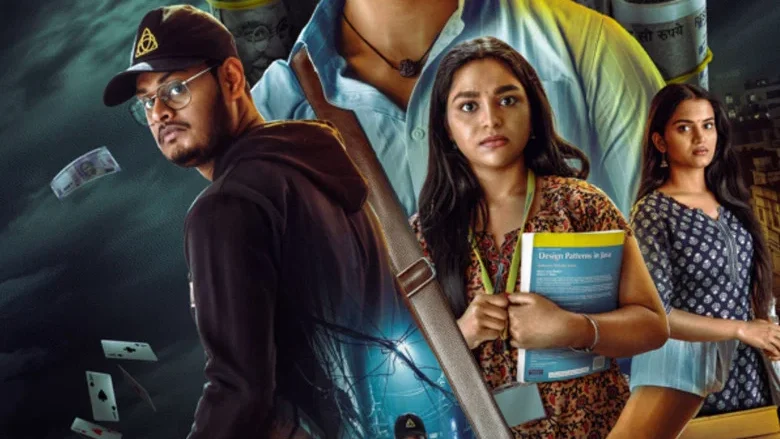
An Underdog Production Story That Outshines Its Own Movie
You can feel the sixteen-day shoot in the film’s bones. The compressed schedule, the patchwork pickup days, the shoestring budget, all of it is legible on screen, and not always as the scrappy virtue the marketing wants it to be.
What genuinely compels is the origin myth. A former IT professional walks away from the desk to make a movie, casting a Bengaluru street vendor alongside him. That collaboration is more interesting than most of what ends up on screen.
Lakshman’s introduction as a man defined by misfortune is efficient, almost clinical. Every beat of bad luck is telegraphed early, establishing the baseline the cap will later shatter, and the film trusts that contrast to carry us.
The Cap Is Both Hero And Villain, Which Is Also The Problem
Rangaswamy’s smartest structural instinct is making luck a physical object. The cap is a legible visual engine, a recurring image that means something every time it appears, no abstract curse, no vague cosmic force.
But a device with no rules is not a mechanism; it’s a mood. The film never establishes what the cap can and cannot do, so its consequences arrive as plot convenience rather than consequence. Suspense needs constraint, and constraint is exactly what’s missing.
The director calls the cap “both the hero and the villain, ” which is a lovely line and a structural confession. When the antagonist is an inanimate object with undefined powers, the third act has nothing to push against but atmosphere.
Compare this to the tighter spatial discipline Rangaswamy’s peers bring to similar conceits, Manduka at least commits to a psychological logic, however brittle. Here the logic is vibes.
Raam Tej Carries The Arc, But The Script Won’t Let Him Land It
The role demands a visible shift: resignation before the cap, confidence after it. Raam Tej plays the pre-cap frustration with a slackness in the shoulders and a flatness in the eyes that reads as genuine exhaustion, not performance.
The post-cap version is where the film stumbles. Tej’s confidence arrives as a switch-flip rather than a corruption, and the screenplay never gives him a moment to register the moral cost of his transformed luck. We watch a man get everything he wanted and feel almost nothing about it.
The supporting cast exists mostly as texture. Rithi Shetty and Srinidhi Bengaluru occupy the frame with presence but no dramatic function, their characters’ arcs left dangling like unmade beds. The restrained exhaustion Tej brings recalls the psychological weight of a turn like KillR, but that film at least gave its lead a confrontation to survive.
Where The Fantasy-Thriller Engine Sputters
The grounded workplace baseline is the film’s best idea. An IT professional’s ordinary life gives the supernatural transformation something to measure against, and the early scenes of office drudgery land with a low-key authenticity.
Once the cap activates, though, the film loses its footing. The shift from fantasy to thriller requires escalation, a rising sense of threat, a tightening noose, and instead we get a series of events that happen to Lakshman rather than because of him.
The absence of a human antagonist is felt most acutely in the second half. The cap’s consequences are abstract, and abstraction is a poor engine for a thriller. The film needs a face to fear, and it keeps giving us a hat.
This is where the film diverges from the genre’s better instincts. The screenplay resists the kinetic sensationalism that overtook Tadviruddha, opting instead for a deliberate, suffocating dread, but without the rules to justify the dread, it’s just a slower kind of nothing.
The Craft Is Functional, The Vision Is Fragmented
Rangaswamy’s direction shows a real instinct for economy. The cap is framed as a recurring motif, a visual anchor that ties the film’s disparate scenes together, and there’s a clarity to the storytelling that suggests a filmmaker who knows what he wants to say.
But clarity of intent is not the same as clarity of execution. The lighting is flat, the coverage is basic, and the editing never finds a rhythm that distinguishes the film’s comic early passages from its darker later ones. The tone drifts.
The score, where it registers, does the heavy lifting of telling us when to feel uneasy. That’s a crutch, not a choice, and it betrays a film that doesn’t trust its own images to carry the tension.
What’s missing is the kind of patient character study that signals a welcome tonal maturity across contemporary Kannada thrillers, the willingness to sit with a character’s moral compromise rather than rushing past it toward the next plot beat.
The Box-Office Math Is As Murky As The Cap’s Rules
The film arrives with no verified production-house muscle behind it, no star-led opening, and box-office trackers listing provisional zeros that reflect unreported data rather than actual collections. That’s not a verdict; it’s a vacuum.
For the Kannada exhibition market, a shoestring fantasy thriller with no franchise scaffolding faces a brutal arithmetic. The cap premise is a hook, but hooks need marketing spend to reach audiences, and this film’s budget clearly didn’t stretch to a campaign.
The theatrical lifecycle for micro-budget high-concept films is unforgiving: a narrow window, word-of-mouth as the only engine, and OTT as the likely destination. Whether Mr. Lucky finds its audience there depends on whether the premise’s promise outweighs the film’s execution gaps.
That’s a gamble the filmmakers took knowingly. The question is whether the audience will take it with them.
A Fable About Luck That Never Learns What Luck Costs
The film’s climax wants to land as a moral reckoning, the cap’s gifts come due, and Lakshman must answer for what he’s taken. But without established rules, the reckoning has no weight. It’s a consequence without a cause.
What lingers is the paradox of the production itself: a film made by people who bet everything on a single high-concept idea, and a story about a man who bets everything on a single magical object. Both gambles are acts of faith.
Mr. Lucky is not a failure of ambition. It’s a failure of architecture, a film that built a beautiful door and forgot to build the house behind it. The cap deserved a better movie, and so did the street vendor who believed in it.





1 thought on “Mr. Lucky (2026): Raam Tej’s High-Concept Cap Fable Is All Premise, No Rules”
Comments are closed.