
Somewhere inside KillR, a woman is told she may be a terrorist, a spy, an actress, or a vampire. The film never quite decides which answer deserves a movie.
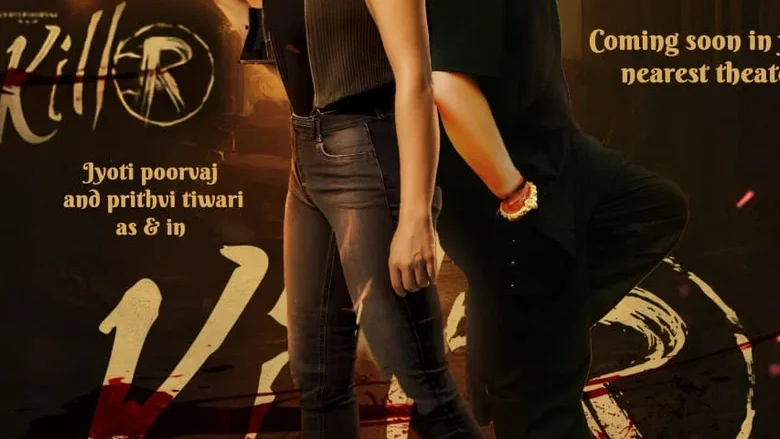
A High-Concept Teaser Trapped Inside a Feature-Length Identity Crisis
Poorvaaj opens his film on a question rather than a character, and that distinction sinks roots through every scene that follows. The central woman, credited across multiple personas, Rania, Raktika, Julia, Sia, arrives as a riddle before she arrives as a person.
That promotional hook works beautifully for ninety seconds. Stretched across a hundred and sixteen minutes, the same ambiguity becomes a structural crutch the screenplay never learns to walk without.
The premise promises a woman piecing together fragmented memories while an AI-driven avatar and a scientist named Dr. Poorvaaj hover at the edges of her reality. What the film delivers is a series of persona reveals that function less as dramatic escalation and more as a magician’s distraction from a missing third act.
When Every Character Is a Question Mark, Nobody Earns Our Attention
The middle stretch leans hard on the mystery of whether these women are separate people or fractured faces of one consciousness. It is a legitimate thriller engine, but engines need fuel, and here the fuel is repetition.
Just as he demonstrated a willingness to let a premise collapse under its own weight in #Cult, Poorvaaj mistakes sustained confusion for sustained tension. The audience is asked to keep guessing, but never given a reason to care about the answer.
Dr. Poorvaaj, played by the director himself, is positioned as a genius scientist tethered to the film’s technological spine. His moral alignment stays deliberately murky, which could be compelling if the screenplay gave him one scene of genuine human contradiction to play against.
Instead, he functions as exposition delivery in a lab coat, and the supporting ensemble, Manish Gilada, Archana Ananth and others, drift through frames without a single moment that clarifies their dramatic purpose.
The Performance Is a Carousel, Not a Character
Jyothi Poorvaj has the hardest job in the film and the least scaffolding. She is asked to differentiate several selves, a spy’s clipped efficiency, a vampire’s predatory stillness, an actress’s performed warmth, and she does so with visible technical effort.
Watch her shoulders in the transitions. There is a physical recalibration, a reset of posture and breath, that suggests an actor building distinct physical vocabularies for each persona. It is the kind of granular work that deserves a screenplay capable of rewarding it.
But the film never lets one identity hold the frame long enough to become a person. The restrained physical exhaustion she brings to the quieter memory-fragment sequences recalls the psychological weight of the turn in Enemy Of The Smuggler, where a performer anchored a procedural through sheer presence rather than plot mechanics.
Here, that presence is chopped into pieces and handed back to us as a puzzle. It is a performance of fragments, and fragments, however skillfully shaped, do not add up to a protagonist we can follow into the dark.
The AI Avatar Is a Concept, Not a Character
The artificial intelligence angle is the film’s most ambitious swing and its most conspicuous miss. An AI-driven avatar should raise genuine questions about consciousness, authorship, and whether a constructed self can possess genuine agency.
Instead, the technology functions as a plot device, a way to explain why the woman has multiple identities without ever interrogating what that explanation means for her as a person. The film gestures at free will and then retreats into chase mechanics.
The screenplay resists the kinetic sensationalism that overtook AAKHRI MULAQAT, opting instead for a deliberate, almost suffocating air of withheld information. That restraint is admirable in theory. In practice, it leaves the film airless, with no release valve for the tension the premise keeps promising to deliver.
By the time the final confrontation with “secret powers” arrives, the stakes have been so thoroughly abstracted that the climax plays as a resolution of a riddle rather than a catharsis for a character.
Direction That Trusts Ambiguity More Than It Trusts Actors
Poorvaaj’s camera has a fondness for the close, withholding frame, faces half-lit, backgrounds swallowed by shadow, the suggestion that something is always being concealed just outside the shot. It is a coherent visual grammar for a film about hidden selves.
But coherence is not the same as dynamism. The film’s palette stays locked in a cool, clinical register that flattens the distinction between the personas rather than sharpening it. A vampire and a spy should feel like they inhabit different worlds; here they share the same lighting scheme and the same emotional temperature.
The editing carries the heaviest burden, tasked with stitching together identities that the script never fully separates. In the first half, the cuts feel deliberate, building the mystery with patience.
In the second, the rhythm accelerates without a corresponding increase in clarity, and the film begins to feel less like a thriller and more like a compilation of its own teaser.
This patient, concept-forward approach signals a welcome ambition across contemporary Telugu thrillers, but ambition without dramatic discipline becomes its own kind of trap.
The Commercial Gamble of a Director Who Casts Himself as the Genius
KillR arrives as a self-produced, self-directed, self-starring vehicle, which places an unusual concentration of risk on a single creative figure.
There is no established production banner visible in the release materials, which means the film’s commercial fate rests almost entirely on the novelty of its premise and the curiosity it can generate in the opening weekend.
That is a fragile position for any release in the current Telugu exhibition market, where star-driven event films dominate screen allocation and smaller high-concept titles fight for breathing room after the first three days.
The female-led, multi-persona science-fiction framing is genuinely distinctive, and that distinctiveness is the film’s best commercial asset. But distinctiveness without word-of-mouth converts into a fast fade, and the film’s deliberate obscurity gives audiences little to recommend to each other beyond the question the trailer already asked.
For a director-actor-producer, the upside is total authorship. The downside is that every structural hesitation on screen reads as a personal choice rather than a studio compromise, and there is no one else to absorb the blame.
A Film That Asks the Right Question and Refuses to Answer It
KillR ends where it began, with a woman whose identity remains contested, and a film that treats that contest as its own justification. The resolution, such as it is, offers explanation without revelation, clarity of plot without clarity of person.
What lingers is not the AI, not the spy, not the vampire, but the sense of a performer doing precise, physically intelligent work inside a structure that never lets her land. Jyothi Poorvaj builds several distinct women and the film declines to let any of them become someone we mourn, fear, or root for.
That is the film’s real tragedy, and it is a structural one. A mystery about a woman with no fixed self should end with us feeling the vertigo of that instability. Instead, we feel only the fatigue of a riddle that was never quite worth solving.







1 thought on “KillR (2026): Jyothi Poorvaj’s Fragmented Identity Gamble Buckles Under Its Own Premise”
Comments are closed.