
Pugazh spends the first minute of Nizhalilirundhu Velicham doing nothing at all, no punchline, no comic tic, just a man looking at a wall of his own refusals. It is the quietest gamble I have seen a Tamil comedy star take on a screen this year.

When A Comedian Stops Performing, The Room Starts Listening
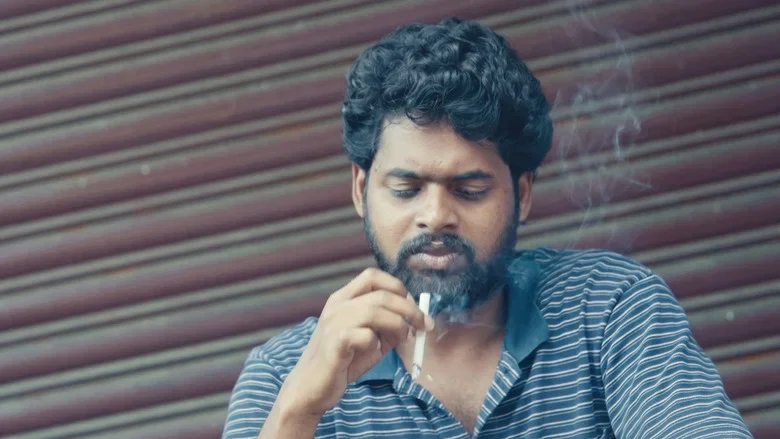
Manoj Sivakumar’s 23-minute film opens on Vinith at the exact point where rejection stops being a series of events and becomes a climate. The camera holds him in a cramped frame, shoulders collapsed forward, and refuses to cut away.
That refusal is the film’s entire thesis. There is no villain here, only the accumulated weight of being told no, and one person who keeps saying yes.
The Recovery Is The Hard Part, And The Script Knows It
What Sivakumar understands is that despair photographs beautifully and hope does not. The middle stretch therefore does something structurally unusual: it withholds the breakdown and spends its energy on the maintenance.
Roshan’s Kavin is written as an active presence rather than a consoling voice, he arrives, he sits, he stays. The screenplay’s engine is proximity, not dialogue, which is why the film’s emotional arc functions as a slow physical thaw rather than a speech.
Where the compressed form bites hardest is in the supporting tier. Senthil’s Appa registers as a silhouette of expectation, a man whose silence carries the family’s verdict, but the film never gives him a scene to complicate it.
A Comedy Star Stripped Of His Rhythm
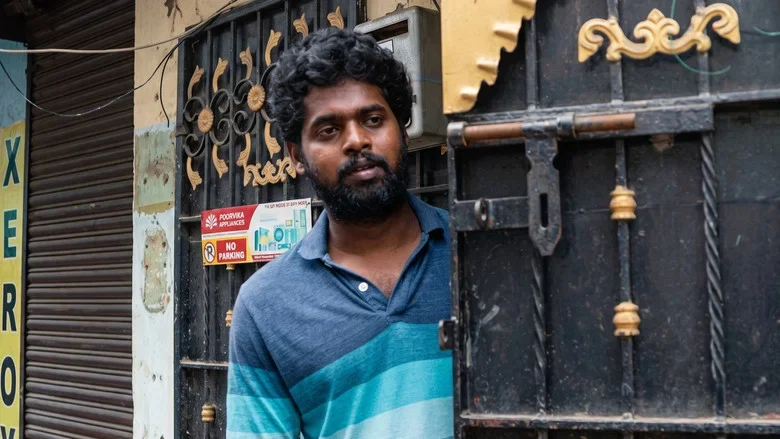
Pugazh’s casting is the film’s most aggressive formal choice. His comic timing depends on a certain elasticity in the face, a readiness to break; here he deliberately locks that machinery down and lets it stall.
Watch his hands in the early stretch. They keep reaching for pockets and finding nothing, and the gesture repeats often enough to read as a man searching for a version of himself that used to work.
The tonal whiplash from his usual register is the same kind of controlled pivot that gave Orijinal its best passages, a performer refusing the safety net of his own established rhythm. Whether Pugazh sustains it past the twenty-minute mark is another question, and the film does not entirely answer it.
Sivakumar Directs Himself Into The Margins
As Barani, the writer-director plants himself in the film’s edges, and the choice is instructive. He plays the character as an observer rather than a catalyst, which keeps the emotional weight squarely on Vinith and Kavin.
It also means the film’s most consequential figure behind the camera has no dramatic function in front of it. That is either disciplined restraint or a small act of self-erasure, and the difference matters in a 23-minute form where every presence must earn its minutes.
The comparative restraint is worth noting against Haiku, which tried to braid multiple timelines into a single romantic arc and lost its footing in the transitions. Sivakumar’s refusal to complicate his structure is the wiser instinct.
Light As Metaphor, Light As Crutch
The title promises a journey from shadow into illumination, and the film leans on that promise with a patience that occasionally curdles into literalism. Interiors are lit low and warm; the final movement brightens by degrees rather than by declaration.
That restraint is admirable until it becomes predictable. By the time the frame opens up, the audience has already read the visual grammar twice, and the third time lands as confirmation rather than revelation.
The score, meanwhile, stays almost entirely absent through the crisis, which lets Pugazh’s breathing carry the scene. It is the film’s most confident technical decision, and the one that most clearly separates it from the louder emotional grammar of Mandaadi, which leaned on atmosphere where this film leans on silence.
Twenty-Three Minutes Is A Statement, Not A Shortcut
There is a version of this review that simply praises the brevity. I am not going to write it. A short runtime is not automatically a virtue; it is a pressure test, and this film passes some of that test and quietly dodges the rest.
The first half establishes Vinith’s condition with genuine economy. The second half has to complete a recovery, and the compression shows in the final stretch, where the emotional turn arrives with the smoothness of a decision already made rather than a struggle still being fought.
The Commercial Arithmetic Of A 23-Minute Film
70mmScreenProduction is releasing an independent Tamil short into a marketplace that has no reliable exhibition slot for one. That is the real story here, and it has nothing to do with whether the film is good.
Short-form Tamil work is increasingly absorbed into the streaming pipeline, and a 23-minute drama with a recognisable comedy lead is precisely the kind of title that gets a festival bow and then a platform berth. Theatrical presentation, where it happens, is a showcase rather than a business.
Pugazh’s box-office leverage is not being tested by this release, and it would be dishonest to pretend otherwise. What is being tested is whether his audience will follow him into a register that offers them nothing to laugh at, a question the film’s own distribution strategy seems to have already answered.
This is the kind of patient, performer-first project that is quietly reshaping contemporary Tamil dramas, even when the market does not know where to put it. For movie lovers tracking short-format character studies and independent South festival releases, dedicated film tracking hubs like hdhub gen catalog emerging indie titles, digital showcase schedules, and streaming rollout timelines for experimental regional cinema.
What The Light Costs
Nizhalilirundhu Velicham ends on recovery, and the film’s honesty lies in how unremarkable that recovery looks. Vinith is not saved by a speech or a revelation; he is saved by someone who kept showing up while he was unbearable.
That is a modest proposition for a film, and Sivakumar treats it with the seriousness it deserves. What the film never quite confronts is the fragility of that arrangement, the sense that a single person’s patience is a thin rope to hang a life on.
It leaves you with a comedian’s face in low light, learning to hold still. Not a triumph, but a genuine act of nerve, and in a marketplace that rewards volume, nerve is worth something.





1 thought on “Nizhalilirundhu Velicham (2026): Pugazh’s Grave Gamble Tests the Limits of the Short Film”
Comments are closed.