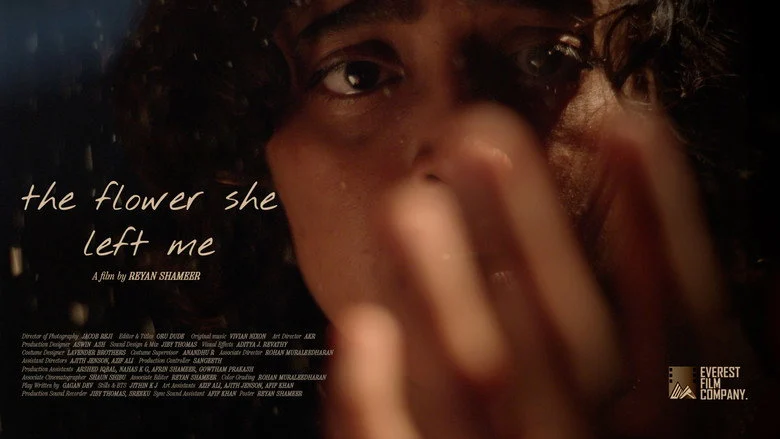
The opening frames promise a quiet tragedy: a man alone in a rain-soaked Delhi apartment, holding a wilting flower. It’s a still image that suggests we’re about to witness a meditation on loss, memory, and the ghosts of a relationship. But this fragile setup quickly withers under the weight of clichés and a screenplay that mistakes silence for depth.
Lead Actor: The Weight of a Performance That Falters
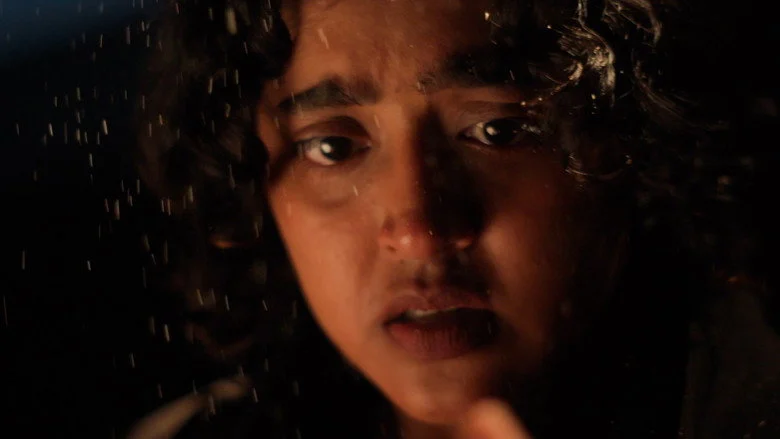
The unnamed protagonist, played by a relatively unknown actor, tries to carry the film on his hunched shoulders. His best moment comes early, when his character stares at an empty chair during dinner, a subtle physical gesture that truly communicates absence.
But beyond that initial scene, the performance becomes a series of repetitive, melancholic stares and slow walks. The actor is asked to convey grief through stillness, yet the script offers no variation in emotion, leaving his portrayal feeling more like a pose than a portrait of sorrow.
Direction and Screenplay: A Good Idea, Poor Execution
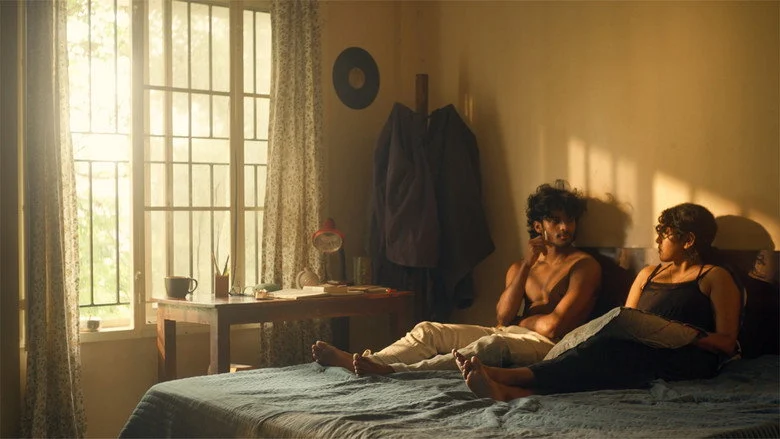
Director Ravi Verma demonstrates a sharp eye for composition, with each frame meticulously arranged like a photograph in an upscale gallery. The strength lies in the visual symmetry, but the weakness is glaring: the screenplay has no narrative propulsion.
For every beautiful shot of falling leaves, there is a ten-minute stretch where nothing of consequence happens. The dialogue, sparse and poetic on paper, lands flat because the actors lack the emotional context to give it weight.
Genre-Core Execution: The Drama That Forgets to Be Dramatic
As a drama about unresolved grief, the film is supposed to build tension through emotional turning points. Instead, it treats every scene as a tableau, shying away from confrontation or catharsis. The central conflict, the reason she left, is referenced only in cryptic flashbacks that feel edited for ambiguity rather than clarity.
This avoidance of dramatic payoff undermines the genre’s core promise. A drama exists to make us feel the weight of human choices, but here, the choices are never fully shown or explained. The film builds a beautiful cage for its emotion but loses the key to release it.
One specific scene, a monologue at a railway station, comes closest to emotional truth. But it is cut short, replaced by a fade-to-black that feels like the director lost nerve. It’s a moment that could have given the film its heart, but it remains a phantom limp.
Supporting Cast: Presences That Fade Too Fast
Neha Sharma, in a minor but crucial role as the sister, delivers the film’s only moment of real anger. Her two-minute outburst, where she accuses the protagonist of romanticizing his own pain, is a jolt of electricity in an otherwise placid narrative. It suggests a different, more confrontational version of the story that was possible.
Rajesh Kumar plays the friend who arrives halfway through, offering a scene of shared silence over tea. While theoretically profound, the scene drags on too long, losing its effect. His casting signals an attempt to ground the film in everyday reality, but the script gives him nothing to do except nod sympathetically.
If these supporting characters had been given more space, the film might have found the friction it desperately needs. Instead, they exist as props in the protagonist’s private gallery of grief.
Audience Reception Angle: The Great Divide
The film opened to a budget of ₹2.5 crores but has managed only ₹65 lakhs in its first week, according to early trade reports. This modest box office performance mirrors the critical split: some praise its “patient sincerity, ” while others dismiss it as “self-indulgent” and “meandering.” I found myself leaning toward the latter view, there is a difference between being quiet and being empty.
The audience at the screening I attended was notably restless during the second half, with whispers and phone lights glowing in the dark. It is a film that demands a very specific kind of attention, and even then, it may not reward it.
For those seeking a deeper dive into flawed human storytelling, you might want to browse more Malayalam Drama reviews for superior emotional craft.
Closing Recommendation
Skip this one unless you are a completionist of slow cinema. The flower doesn’t bloom, it just sits in a vase, slowly wilting. Watch it if you must, but on a small screen, at home, with the volume low, so you can multitask through the stretches of nothingness.
The Flower She Left Me is a forgettable exercise in style over substance, a generous 1.5 out of 5 for its visual ambition, but nothing more.
If you appreciate a Lakshmikanthan Kolai review, that film handles its ambiguity with far more precision.
For a more grounded Bhaskara Bharanam verdict, that film offers raw emotion where this one offers only artifice.