
The puppet is enormous. It hangs in the dark of a warehouse like a discarded god, and when the gunshot comes, the camera does not flinch toward the violence, it holds the puppet’s blank, painted face as if the object itself were the witness. That single composition tells you what kind of thriller Tetsuya Mariko has built: one in which the crime is never the point, only the pressure gauge.
Kenji (Hidetoshi Nishijima) is a Japanese academic grinding through the tenure track in New York. Jane (Gwei Lun-mei) is a Taiwanese puppet-theatre artist raising their son Kai while her husband’s career swallows the household oxygen. Their marriage has the specific texture of two people who have stopped translating for each other. Then Kai vanishes, no ransom note, no coherent motive, nothing that behaves like a kidnapping should.
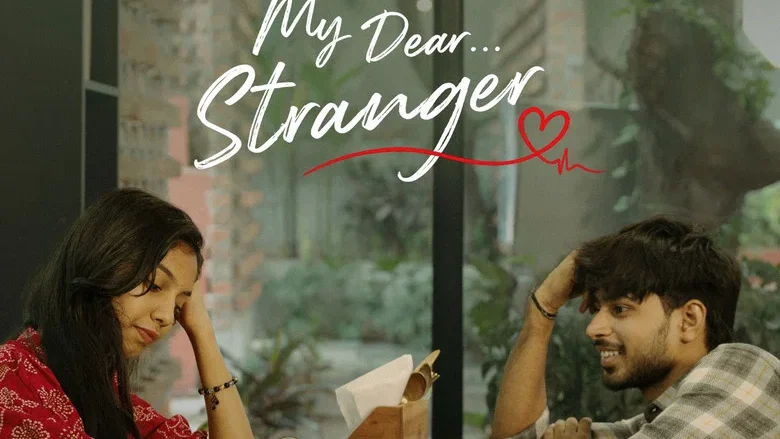
A Kidnapping Without A Villain Is A Marriage Under A Microscope
Mariko’s screenplay refuses the procedural comfort of a suspect. The absence of a ransom demand is not a plot hole; it is the film’s thesis. When the investigation links Kai’s disappearance to an unresolved warehouse shooting, the question stops being who took the child and becomes what were these two people hiding from each other before the child was even gone.
The comparative peer here is unmistakable. Just as the ambitious cross-cultural architecture of Manithee strained against its own reach, Mariko’s film carries a similar structural weight, three genres, two languages, one collapsing family, and occasionally buckles beneath it. Where Mariko succeeds is in refusing to let the crime resolve the marriage. The mystery is the marriage.
What the screenplay understands, and what the audience feels in the bones, is that migration turns intimacy into translation. Kenji and Jane speak English to each other because they have no shared mother tongue, and the film weaponizes that fluency. Every argument is slightly off-key, slightly rehearsed, because both are performing a version of themselves the other can parse.
Nishijima Plays Restraint As A Form Of Confession
Nishijima has spent a career building characters out of what they withhold, the widower in Drive My Car who listens more than he speaks, the salaryman whose composure is a cage. Here, Kenji’s stillness is different. It is not grief; it is evasion. Watch his hands during the domestic arguments. They stay at his sides, palms open, a man performing reasonableness while his jaw locks on every third sentence.
The performance foil is instructive. The way Gwei Lun-mei anchors Jane’s creative frustration recalls the quiet tensile strength Paris Cafe brought to a maternal role that could have curdled into martyrdom. Gwei does something harder: she lets Jane be unlikeable. In the early scenes, she snaps at Kai over a dropped puppet, then catches herself, and the flicker of self-recognition across her face is more damning than any scream.
Their English-language exchanges are the film’s real battlefield. Neither actor is performing in their first language, and Mariko uses that friction deliberately. The pauses land wrong. The idioms feel borrowed. A marriage conducted in a third language is a marriage conducted at permanent arm’s length.
The Puppet Keeps Watching, And The Film Keeps Withholding
Mariko’s visual grammar is built on the puppet motif, and he never over-explains it. In Jane’s studio, the figures are half-finished, limbs detached, faces unpainted, creative work as ongoing incompletion. In the warehouse, the puppet is finished, enormous, and present at a killing. The film does not editorialize. It simply places the object where the audience cannot stop looking at it.
The New York location work is unglamorous in the right way. This is not the postcard city; it is fluorescent hallways, cramped apartments, the specific grey of a hospital corridor at 3 a.m. The cinematography keeps the camera at a distance during the marital scenes and pushes closer only when the police arrive, as if intimacy were only possible under interrogation.
What the film resists, and what the genre sibling Newton's 3rd Law could not always manage, is the temptation to let the procedural machinery take over the emotional engine. Mariko keeps the investigation subordinate to the marriage. The detectives are pressure, not protagonists.
At 138 Minutes, The Film Earns Some Of Its Length And Squanders The Rest
The runtime is the film’s clearest liability. The first half builds with patience, domestic friction, professional resentment, the slow accumulation of small betrayals, and Kai’s disappearance lands with genuine force. The second half, however, expands rather than deepens. The investigation multiplies threads, and the film’s commitment to ambiguity starts to feel less like rigor and more like evasion.
Audiences have flagged this, and they are not wrong. There is a version of this film at 110 minutes that would hit harder, because the central question, what did Kenji and Jane not know about each other, does not need three procedural detours to land. The warehouse shooting is the film’s best scene precisely because it is the shortest. It trusts the image and gets out.
The supporting cast is largely functional. Kai works as an emotional pivot rather than a character, his limited comprehension of the adult world around him is the film’s quietest source of dread. The investigators exist to apply pressure, and they do, but they never become people. That is a choice, and it mostly holds.
What The Ending Refuses To Give You Is The Point
When the kidnapping, the shooting, and the family’s concealed history finally converge, Mariko does not offer catharsis. He offers recognition, the specific horror of realizing you have shared a bed, a child, and a decade with someone whose interior life you have never actually entered. The crime resolves. The marriage does not.
This patient refusal of comfort signals a tonal maturity that runs through the more interesting edges of contemporary Telugu thrillers and their international cousins, a willingness to let dread do the work that plot mechanics used to handle. It will frustrate viewers who came for a kidnapping procedural. It will haunt the ones who stayed.
Dear Stranger is not a film that wants to be loved. It wants to be sat with, argued about on the drive home, and then quietly avoided for a few weeks because it got under the skin in a way that is hard to name. That is not a flaw. That is the whole point.
Rating: 3.5 / 5
The final shot does not tell you whether Kenji and Jane will stay together. It tells you something worse: that they will never again be able to pretend they know each other. Some films end with a door closing. This one ends with a door that was never really open.







2 thoughts on “My Dear Stranger (2026): Hidetoshi Nishijima Anchors a Transnational Mystery That Refuses to Blink”
Comments are closed.